2026 Global Health Summer Internship Opportunities for Harvard Undergraduate Students are Now Open for Applications
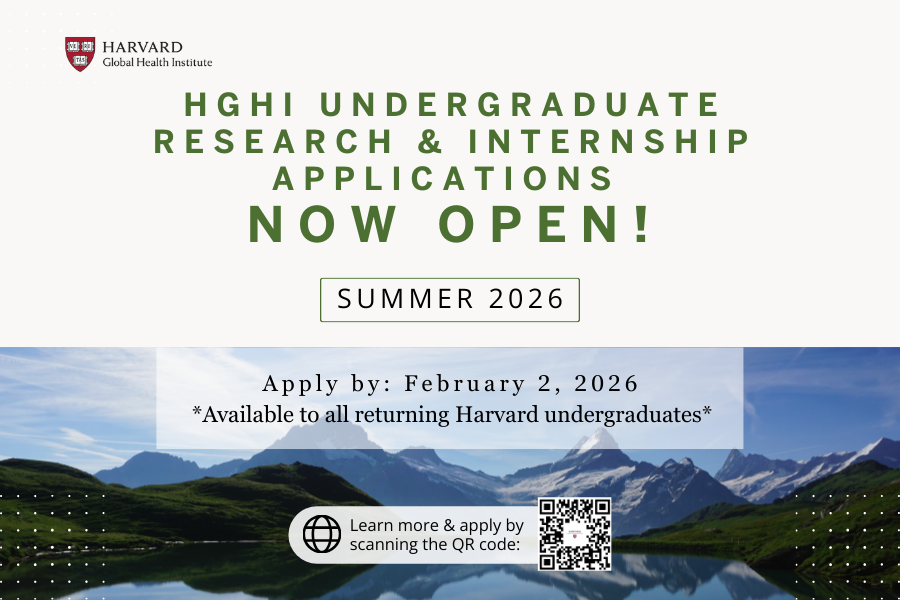
Applications to the Harvard Global Health Institute’s paid summer research and internship placements for returning Harvard undergraduates are now open. Students selected for the program will receive a stipend to cover travel, living, and local transportation expenses for the 10-week internship, which begins in early June 2026. Ranging from placements in laboratories and research groups to fieldwork with hospitals and community health clinics to office-based internships with NGOs and international organizations, these opportunities help students connect classroom knowledge and skills to the complex issues in the field.
The application deadline is February 2nd, 2026 by 11:59pm ET.
Two Types of Internships
Internships may be research-based or non-research-based, domestic or international.
- Pre-arranged Internships: The Harvard Global Health Institute (HGHI) offers students the opportunity to intern with one of our partner organizations, including nonprofits, NGOs, and other organizations on the cutting edge of global health and health policy. Some internships are field-based, while others are office-based. Sites can also be domestic or international.
- Summer Undergraduate Research in Global Health (SURGH) offers students the opportunity to research critical issues in global health under the direction of a Harvard faculty or affiliate mentor while living on campus. Residential programming and financial support are meant to enable SURGH fellows to form a close-knit community with each other and with the Undergraduate Research Village, including PRISE, BLISS, PRIMO, and SHARP students.
The full listing of opportunities is available on our Summer Opportunities page.
About our HGHI Summer Research and Internship Programs
The Harvard Global Health Institute (HGHI) offers returning Harvard undergraduates the opportunity to participate in paid summer research and internship placements. These opportunities connect classroom knowledge and skills to the complex issues in the field. They range from placements in laboratories and research groups, to field work with hospitals and community health clinics, to office-based internships with NGOs and international organizations.