

January 30, 9:00 am - 10:00 am
Strategies for Improving Maternal Healthcare Delivery: Insights from Pakistan and Sub-Saharan Africa
-
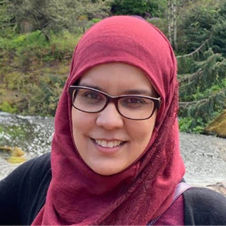 Maryam Mustafa, PhD
 -
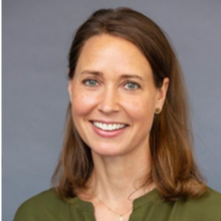 Julie Mann, CNM, MSN, MPH
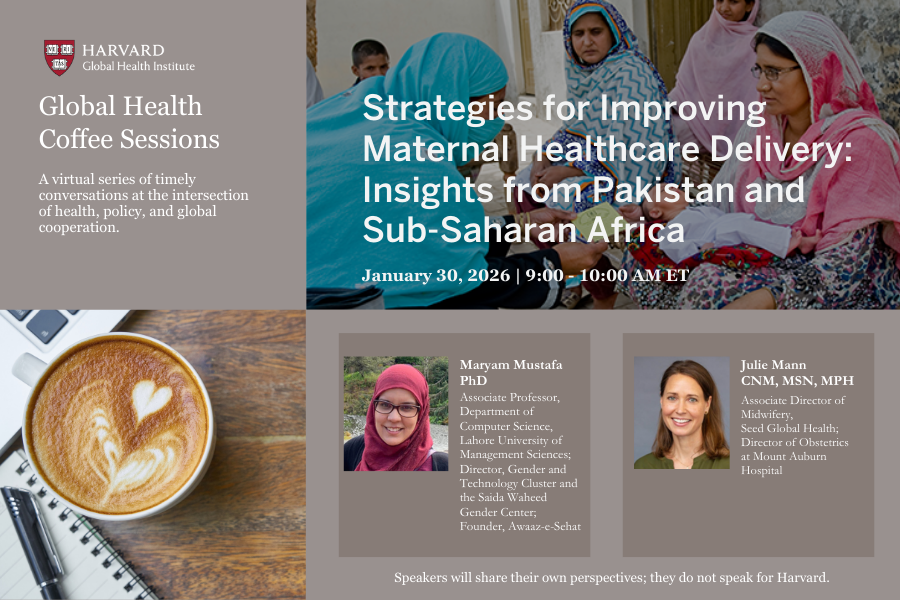
Across the globe, maternal healthcare systems face shared challenges: shortages of skilled providers, fragmented care pathways, and overburdened frontline workers. Addressing these gaps requires approaches that strengthen both sides of the care relationship, empowering women to navigate their health needs while equipping clinicians to deliver respectful, high-quality care.
This webinar highlights two complementary strategies that reflect distinct but aligned approaches to improving maternal care delivery. Dr. Maryam Mustafa of Awaaz-e-Sehat in Pakistan will speak on her experience building an AI-powered, voice-based assistant designed to give women an accessible entry point into the health system. The tool helps women triage symptoms, understand when and how to seek care, flag risks such as pre-eclampsia, and maintain their own digital health records, enabling more informed, timely interactions with providers. Julie Mann of Seed Global Health will share a clinician-focused approach through a “low-dose, high-frequency” midwifery preceptor model being scaled across sub-Saharan Africa. This program strengthens the backbone of maternal care by supporting midwives to build clinical competence, listen closely to patients’ concerns, and deliver care grounded in trust and respect.
Together, these perspectives illustrate how “high-tech” tools that amplify women’s voices and “high-touch” training that centers compassionate, patient-responsive care can address different challenges within maternal healthcare systems.
This event is free and open to the public.
Speakers
Maryam Mustafa, PhD
Associate Professor, Department of Computer Science, Lahore University of Management Sciences
Director, Gender and Technology Cluster and the Saida Waheed Gender Center, Lahore University of Management Sciences
Founder, Awaaz-e-Sehat
Dr. Maryam Mustafa is an Associate Professor of Computer Science and the Director of the Saida Waheed Gender Centre at the Lahore University of Management Sciences (LUMS), Pakistan. She is also the founding Director of the National AI and Maternal Newborn Child Health Hub at LUMS, funded by the Gates foundation. Her work leverages artificial intelligence to address structural barriers in access to healthcare and information systems, with a focus on creating inclusive, contextually grounded AI tools and technologies. She is the founder of Awaaz-e-Sehat, a speech-based AI system designed to improve maternal health outcomes in Pakistan. Her work in AI-driven innovation has won the Gates Global Grand Challenges Award, the Google Academic Research Award in AI and Society, awards from PATH and the Patrick J. McGovern Foundation.

Julie Mann, CNM, MSN, MPH
Associate Director of Midwifery, Seed Global Health
Director of Obstetrics at Mount Auburn Hospital
Julie Mann, CNM, MSN, MPH is the Director of Obstetrics at Mount Auburn Hospital and Director of Midwifery at Seed Global Health where she guides midwifery programming and supports maternal health initiatives in sub-Saharan Africa. With over 20 years of experience as a midwife in clinical practice and public health, she specializes in program design, implementation, and evaluation to improve maternal health outcomes.
Previously, she worked as the co-director of women’s health for Partners in Health in Haiti and as a MGH Global Health Nursing Fellow at Lira University in Uganda. Julie has also practiced midwifery in the rural southwest while living on Navajo Reservation in New Mexico. Julie earned her MSN from Yale University and her MPH from John Hopkins University and has been recognized as a Fellow in Medical Education at Harvard Medical School and Mount Auburn Hospital.
About the Global Health Coffee Sessions
The Global Health Coffee Sessions is a virtual series of timely conversations on wide-ranging topics at the intersection of health, policy, and global cooperation. The series brings together global health experts, policymakers, and practitioners from Harvard and beyond for dynamic, forward-looking discussions.
All sessions are hosted virtually via Zoom, recorded, and available afterward on our YouTube Channel.
The Harvard Global Health Institute provides a platform for different perspectives and debates within the field of global health through a variety of media. The views expressed in these events and programs are solely those of the speakers, authors, researchers, and participating audience. As such, they do not speak for the institute or the university.