2026 Cohort of HGHI Burke Global Health Fellows

Carl Denis Britto
MBBS, DPhil
“The HGHI-Burke Fellowship serves as the definitive structural bridge for my transition to an independent career as a Clinician-Scientist in Pediatric Critical Care Informatics. By providing the critical protected time to shift my research from retrospective feasibility to prospective, bedside-validated implementation, this fellowship allows us to stress-test our ‘Frugal AI’ pipeline across 20 tiered neonatal units in India. The adoption metrics and lead-time data generated through this support will provide the essential foundation needed to secure large-scale federal funding for a definitive randomized trial. Ultimately, this fellowship empowers the translation of complex physiological data into proactive, life-saving clinical action ensuring that advanced predictive analytics are no longer restricted by a facility’s wealth, but are democratized to protect the world’s most vulnerable infants.”
– Carl Denis Britto
Carl Denis Britto, MBBS, DPhil, is an Instructor in Pediatrics at Harvard Medical School and an Attending in Critical Care at Boston Children’s Hospital, where he also serves as the Co-Director for Research for the Global Health Program. Operating at the intersection of global health, acute care, and artificial intelligence, Dr. Britto is dedicated to vaidating and deploying medically grounded, infrastructure-agnostic digital solutions to mitigate the digitization gap in low- and middle-income countries (LMICs). A former Rhodes Scholar, Dr. Britto earned his DPhil from the University of Oxford and subsequently trained in pediatrics and pediatric cirtical care at Boston Children’s hospital as well conducted post-doctoral research at Harvard. His clinical experiences managing rural patients in India profoundly shaped his research agenda, revealing that pediatric and neonatal survival in high-acuity settings is often limited not by hardware, but by the absence of longitudinal data synthesis. Over the past five years, he has spearheaded a highly productive collaboration with NICUs and ICUs in India, leveraging data from an expansive tele-ICU network spanning 13 Indian states to develop algorithmic escalation models for respiratory distress. His work has consistently driven global health policy and clinical innovation. As a clinician-scientist, Dr. Britto aims to leverage advanced predictive analytics to level the clinical playing field and ensure equitable, data-driven critical care for the world’s most vulnerable newborns.
Project Title: Predicting Neonatal Respiratory Escalation in Resource-Limited Settings: A Prospective 20-Site Validation of Infrastructure-Agnostic Frugal Artificial Intelligence across Tiered Indian NICUs.
Project Description: Respiratory failure is the leading driver of neonatal mortality in low- and middle-income countries (LMICs), accounting for roughly 35% of newborn deaths globally. In these resource-constrained environments, the absence of Electronic Health Records (EHRs) creates a severe digitization gap that prevents the implementation of life-saving predictive analytics. To bridge this divide, this project aims to deploy and prospectively validate an infrastructure-agnostic frugal AI framework designed to bypass traditional, cost-prohibitive EHR pipelines. The innovative, dual-stage computational architecture pairs a high-fidelity Computer Vision (CV) engine which repurposes existing analog bedside monitors into digital data sources via automated image processing with a parsimonious, four-variable Machine Learning (ML) model that predicts imminent respiratory escalation. This study will be conducted as prospective validation of the integrated CV-ML pipeline across a tiered network of 20 Indian Neonatal Intensive Care Units (NICUs), encompassing urban, semi-urban, and rural facilities. Enrolling 1,000 neonates, the project will rigorously evaluate the CV pipeline’s technical accuracy against a human-verified gold standard, validate the predictive precision of the ML respiratory signature in a live clinical environment, and quantify real-world clinical adoption, specifically measuring the lead-time gain provided to frontline clinicians. By transforming passive clinical observation into proactive, data-driven intervention without requiring costly hardware upgrades, this interdisciplinary initiative establishes a vendor-agnostic blueprint to eliminate preventable neonatal mortality and advance health equity in global critical care.
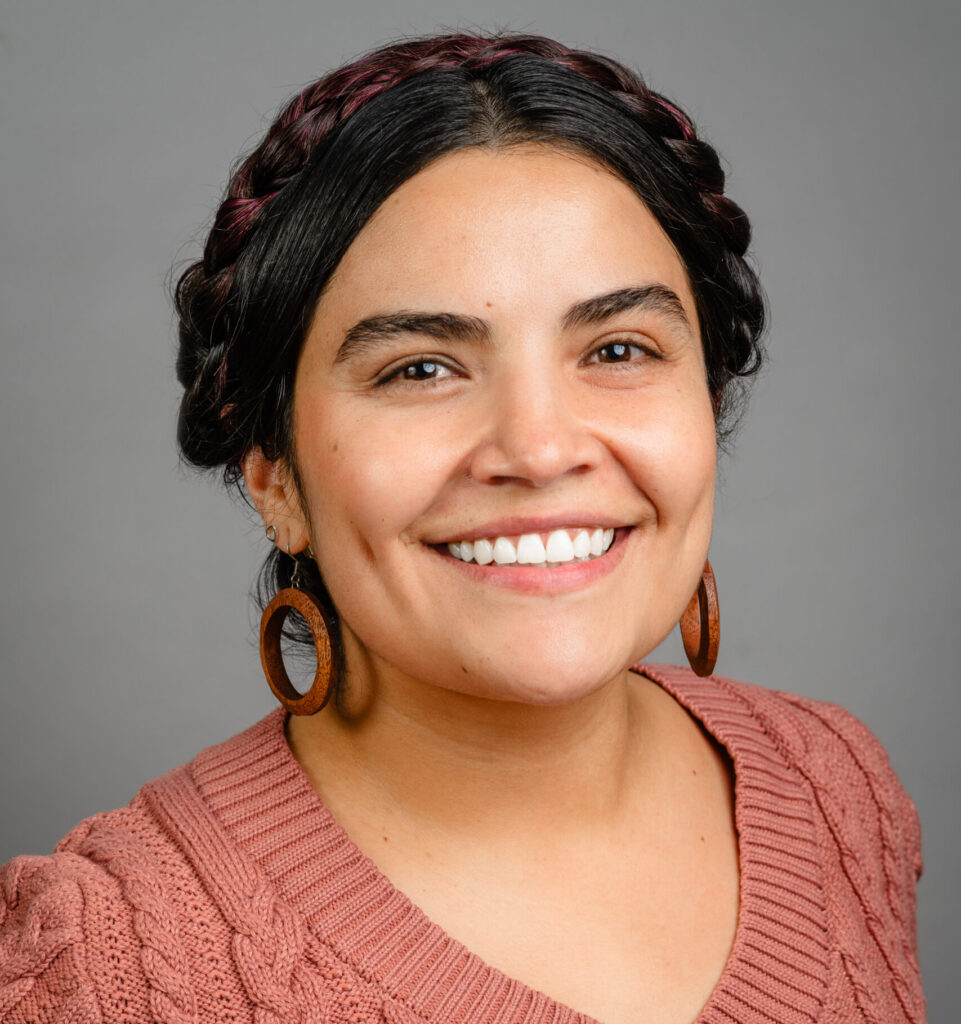
Anahí Venzor Strader
MD
“The Burke Global Health Fellowship provides the critical protected time and support I need at this early faculty stage to advance community-governed, emancipatory global health research. This fellowship allows me to deepen our vital work with Wuqu’ Kawoq in Guatemala, laying the groundwork to pursue larger career development awards and scale culturally grounded health interventions that protect vulnerable Indigenous children across the Americas.”
– Anahí Venzor Strader
Anahí (pronounced Ah-nah-ee)is a pediatrician originally from Chihuahua, México, the ancestral territory of the Rarámuri and Tepehuan peoples. Her extensive work in global health centers on the health and rights of Indigenous children in Northern México and Guatemala.
She completed her medical education at the Instituto Tecnológico de Monterrey, her pediatrics residency at Wake Forest University, a Global Health fellowship at Boston Children’s Hospital, and her Master of Medical Sciences in Global Health Delivery at Harvard Medical School. Over the last twelve years, she has collaborated closely with grassroots organizations like Hospital Misión Tarahumara and Wuqu’ Kawoq / Maya Health Alliance. Following her earlier mixed-methods research (2021–2023) exploring the biosocial determinants of neonatal mortality in rural Guatemala, her focus has evolved toward developing collaborative solutions to these challenges through co-design and anticolonial initiatives. These innovative projects include implementing AI and smartphone technology to reduce neonatal morbidity and mortality, as well as establishing home-based care models for small and vulnerable babies.
In addition to her international work, Anahí leads a quality improvement initiative to improve healthcare delivery for newly arrived immigrant children in Boston. Clinically, she serves as a pediatric hospitalist at Winchester Hospital while also holding a junior faculty role at Harvard Medical School. As a Burke Global Health Fellow, Anahí looks forward to leveraging her training and research to continue materializing the right to health for Indigenous populations and advancing community-based health equity.
Project Title: Co-design and Early Evaluation of a Culturally Grounded Home-Based Care Package for Small and Vulnerable Newborns in Indigenous Guatemala
Project Description: In the rural highlands of Guatemala, premature and low-birth-weight babies face steep hurdles to survival due to geographical isolation, limited hospital capacity, and distinct cultural barriers. To bridge this gap, Dr. Anahí Venzor Strader is leading a pioneering initiative with Wuqu’ Kawoq that flips the traditional medical paradigm. Instead of dictating care from the top down, this project positions traditional Maya midwives, local health workers, and caregivers as equal co-designers of a culturally grounded, home-based care package.
Supported by the Burke Fellowship, the team will formally evaluate the integration of ancestral postpartum wisdom with modern digital tools—including low-cost hardware and a smartphone-based clinical support app—into co-designed care and referral protocols. By evaluating the real-world success and cultural adaptability of practices like thermal protection, feeding supplementation, and home-based growth tracking, this project aims to establish an emancipatory, community-governed healthcare blueprint. Ultimately, these insights will help protect vulnerable newborns in remote, resource-constrained settings worldwide.