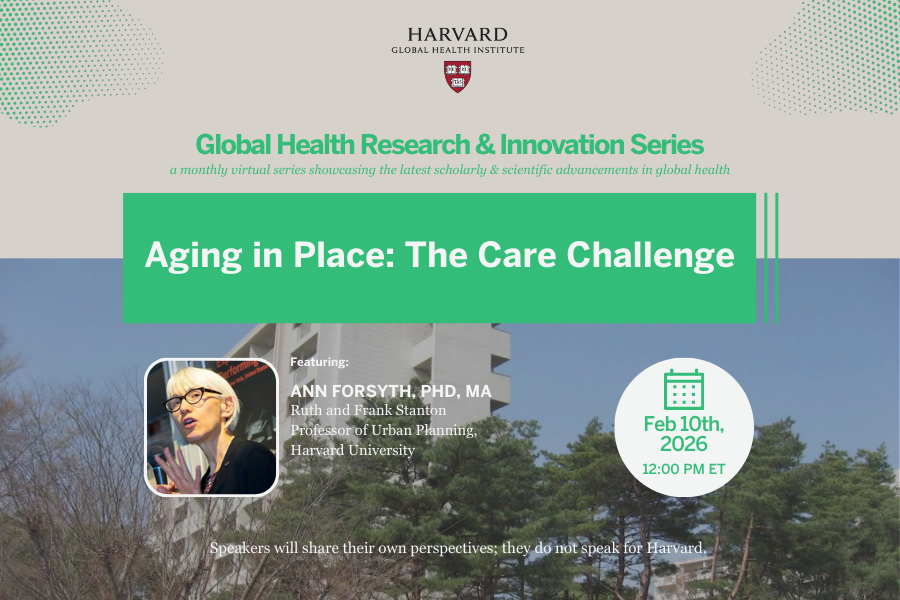
RECORDING: Aging in Place: The Care Challenge
In this talk, Professor Ann Forsyth explores how the built environment can support older adults who wish to remain in their homes and communities as they age.

As we honor Disability Pride Month (July), it’s essential to recognize how the accelerating climate crisis disproportionately affects people with disabilities and why climate justice must include disability rights at its core. According to The Lancet Planetary Health (2024), more than 1 billion people with disabilities, 80% of whom live in low-income and middle-income countries (LMICs), are disproportionately and adversely affected by the climate change crisis. From heatwaves and natural disasters to inaccessible evacuation plans and disrupted health services, the impacts of climate change pose heightened risks to people with disabilities around the world.
In the recent study, Preparedness, Information Needs, and Interruptions in Medical Care after the California Oak Fire, Dr. Tess Wiskel, Burke Fellow at the Harvard Global Health Institute (HGHI), found that during the California Oak Fire, many individuals with medical vulnerabilities experienced health harm due to wildfire-related disruptions. Nearly a quarter of respondents missed or delayed care, particularly those relying on medical devices or complex treatments, illustrating the large effect of climate disasters on health inequities.
Similarly, Dr. Satchit Balsari, CrisisReady co-lead and HGHI Steering Committee Member, warns that “our health systems remain unprepared for protecting the most vulnerable during crises”.
At the forefront of advocating for this change is Professor Michael Stein, co-founder and Executive Director of the Harvard Law School Project on Disability (HPOD). With work spanning over 20 years and more than 40 countries, Stein and HPOD are transforming how policymakers and advocates understand the intersection of disability rights and climate action.
“People with disabilities must be recognized not only as those most impacted by climate change but also as critical leaders in shaping solutions,” Stein emphasized at COSP18, the UN’s recent conference on the Convention on the Rights of Persons with Disabilities (CRPD). “Our response to the climate crisis must be grounded in the lived experiences of people with disabilities, not just theory or policy, but real-world needs and leadership.”
HPOD provides training, legal tools, and community resources, such as their Easy Read guide for disability climate advocates, to ensure people with disabilities can lead change. Their work spans legal reform, inclusive development, and building alliances that empower self-advocacy across the globe.
Start by learning about the rights of people with disabilities and how the climate crisis affects them. Share this knowledge within your networks to build broader awareness and collective action.
Explore the resources on HPOD’s Disability and Climate Justice page. Additional resources can be found at Harvard University Disability Resources.
Push for climate action that protects and includes disabled people, from emergency planning to infrastructure to health systems.
Use frameworks like the United Nations Committee on the Rights of Persons with Disabilities and insights from Harvard’s Center for Climate, Health, and the Global Environment (C-Change) and FXB Center for Health and Human Rights to guide your advocacy.
Work with and support Disabled Peoples’ Organizations (DPOs) that are already leading change. Coalition-building ensures the voices of disabled people are centered in the climate movement.
Partner with global organizations like the Disability Rights Fund (DRF) or World Institute on Disability (WID), and seek out local DPOs doing work in your own community.
Back policies and programs that recognize disabled people as leaders in building climate resilience.
Learn from global examples in the United Nations’ Leaving No-One Behind report and CBM Global’s Climate Crisis and Persons with Disabilities, which spotlight inclusive disaster risk reduction efforts.
In this talk, Professor Ann Forsyth explores how the built environment can support older adults who wish to remain in their homes and communities as they age.
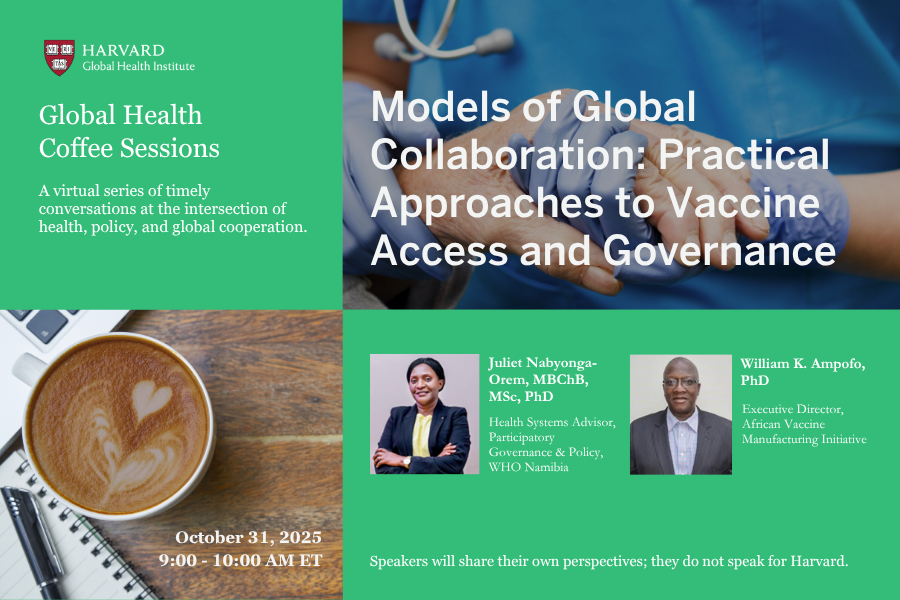
This panel explores how nations are advancing local vaccine manufacturing to accelerate health equity, offering insights into what national ownership looks like for vaccine development and distribution today, especially as traditional donor support declines.
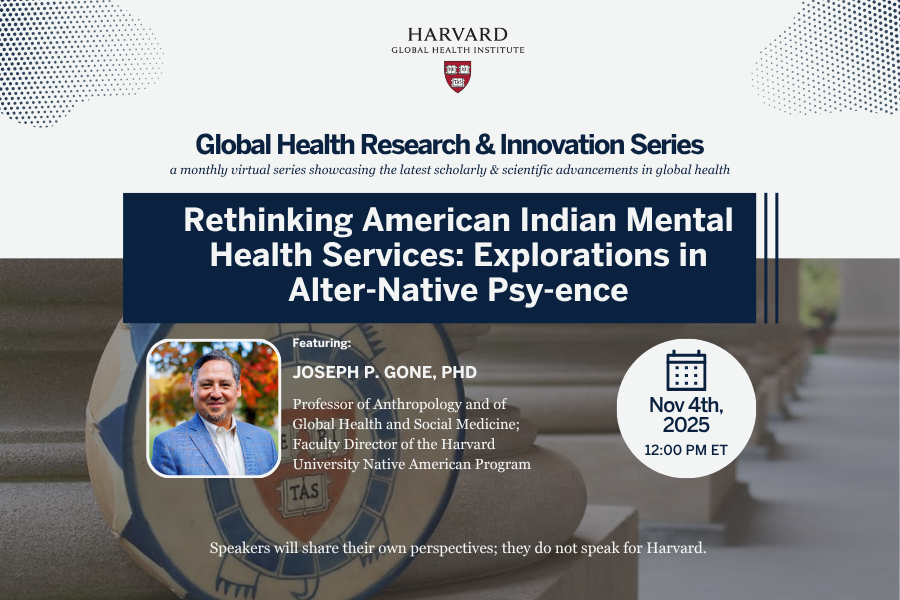
In this talk, Professor Joseph P. Gone explores how Indigenous perspectives can reshape understandings of mental health, challenging Western psychiatric frameworks and reframing “mental health” concerns as postcolonial disorders.