


2025-2026 Cohort
Is it already too hot to work? Protecting work and workers in a warming world
Co-led by Satchit Balsari, Associate Professor of Emergency Medicine at Harvard Medical School and Beth Israel Deaconess Medical Center and Associate Professor in the Department of Global Health and Population at the Harvard T.H. Chan School of Public Health, and Sharon Block, Professor of Practice at Harvard Law School and Executive Director of the Labor and Worklife Program, the Heat and Worker Protections Scholarly Working Group brings together researchers, policymakers, practitioners, and labor organizations to address global rising temperatures and the research and policy gaps that leave 2 billion workers around the world vulnerable. This working group is looking at the efficacy and economic impacts of heat adaptation measures such as cool roofs, heat insurance, worker rest breaks and sanitation measures, and flexible work-times.
This group leverages the cross-disciplinary expertise of collaborators from Harvard’s Medical, Law, Public Health, and Design Schools; leading global institutions such as the University of Oxford, BRAC University, the University of Thessaly, and the University of California, Los Angeles; as well as organizations including the Self-Employed Women’s Association (SEWA), the Atlantic Council, and the Ford Foundation.
Conference
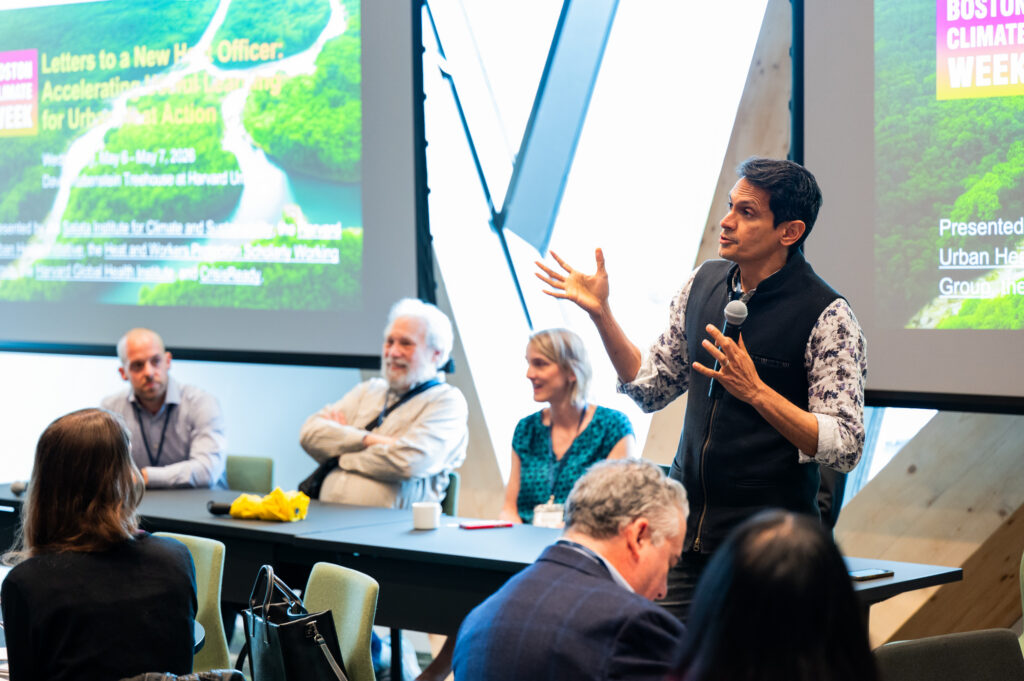
The working group convened a two-day meeting during Boston Climate Week, bringing together city officials, researchers, and practitioners from across the United States to explore strategies for protecting communities and workers from the growing risks of extreme heat.
Participants took part in an interactive simulation, breakout discussions, and expert-led sessions on topics including thermal physiology, heat-related mortality, and impacts on energy infrastructure. Panel discussions focused on health, habitat, and labor, with insights from the meeting informing a forthcoming resource, Letters to a New Heat Officer, designed to support local leaders developing heat resilience strategies.
The event was co-hosted by the Salata Institute for Climate and Sustainability, Harvard Urban Health Initiative, the Harvard Global Health Institute Heat and Worker Protections Scholarly Working Group, and CrisisReady at the Harvard Data Science Initiative.
Resources
Heat & Worker Safety: 12 Common Myths & What the Evidence Actually Shows
Finding Problems Worth Solving: A Design Thinking Approach in Global Health
Food Systems, Vulnerability, and Adolescent Health in Sub-Saharan Africa: An Urgent Call for Integrated Action
Led by Wafaie W. Fawzi, Richard Saltonstall Professor of Population Sciences and Professor of Nutrition, Epidemiology, and Global Health and Population at the Harvard T.H. Chan School of Public Health, this Scholarly Working Group brings together researchers and partners to address the multifaceted challenges facing adolescents in Sub-Saharan Africa (SSA). Food insecurity and economic instability are compounded by unpredictable growing seasons, prolonged droughts, and pressures that reduce agricultural yields and access to nutritious food. Adolescents are uniquely impacted, with malnutrition affecting their physical, cognitive, and mental health, while social inequalities expose girls to greater risks such as anemia and boys to being pulled from school for labor.
The group is building a multidisciplinary, community-engaged framework that bridges research, policy, and practice to address the interconnected challenges facing adolescents in SSA, with a focus on food security, nutrition, health, and education. The work recognizes adolescents as key agents of change and seeks to strengthen evidence and partnerships to advance sustainable, context-specific approaches to adolescent health and well-being.
Conference
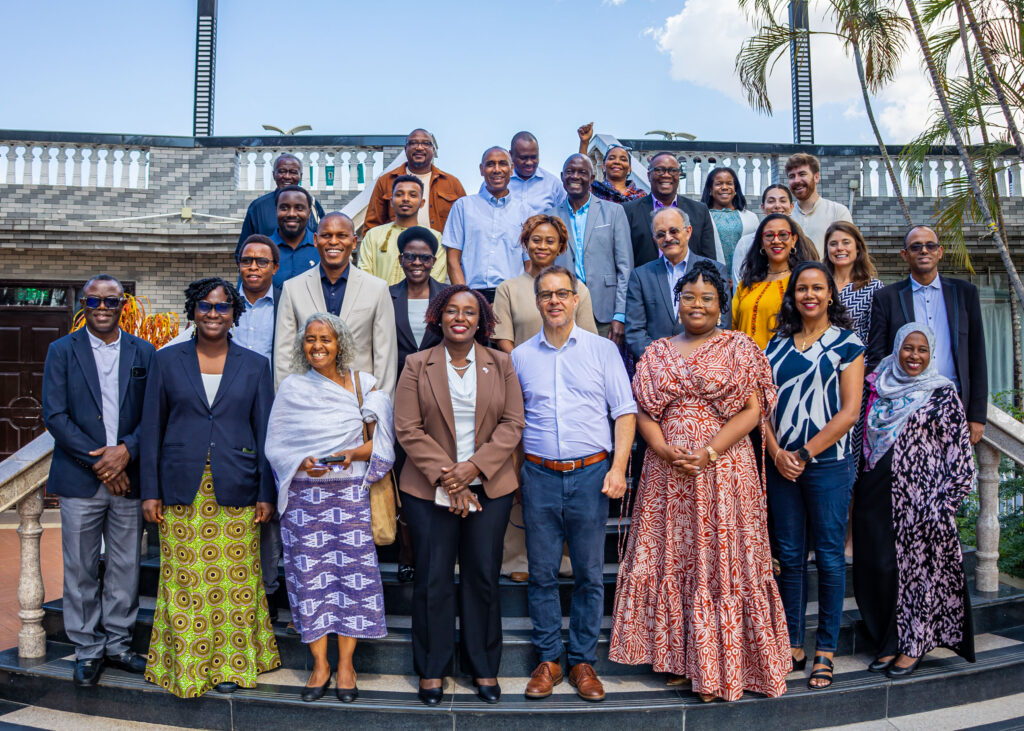
In June 2026, the working group co-sponsored the third annual Conference on Adolescent Health in Sub-Saharan Africa (CAH-SSA) in Dar es Salaam, Tanzania. The conference, organized around the theme “Showcasing Community-Driven Adolescent and Youth Health Sustainable Interventions,” brought together experts and initiatives working across adolescent health research, capacity-building, stakeholder engagement, and the translation of research findings into feasible, context-specific policy action.
As part of the conference, the School Meals Working Group convened a dedicated session highlighting ongoing research on school feeding, food systems, and adolescent nutrition across Sub-Saharan Africa. The session featured presentations from the ARISE Network’s ongoing studies and country programs, alongside discussions on strengthening the evidence base to inform policy and practice.
The conference was hosted by the Africa Research, Implementation Science, and Education (ARISE) Network, a collaborative network of 22 member institutions from ten Sub-Saharan African countries, together with the Harvard T.H. Chan School of Public Health and the Heidelberg Institute of Global Health in Germany.
Featured Research
Effects of school feeding programmes integrating food systems components on health, nutrition, education and food systems outcomes in low- and middle-income countries: a systematic review protocol
This systematic review protocol examines how school feeding programs that integrate food systems components may influence health, nutrition, education, and food systems outcomes in low- and middle-income countries. The work reflects the group’s broader focus on strengthening evidence to inform research, policy, and practice at the intersection of school feeding, food systems, and adolescent nutrition.