The Future of Global Health: Learning from a Decade of Impact in Madagascar
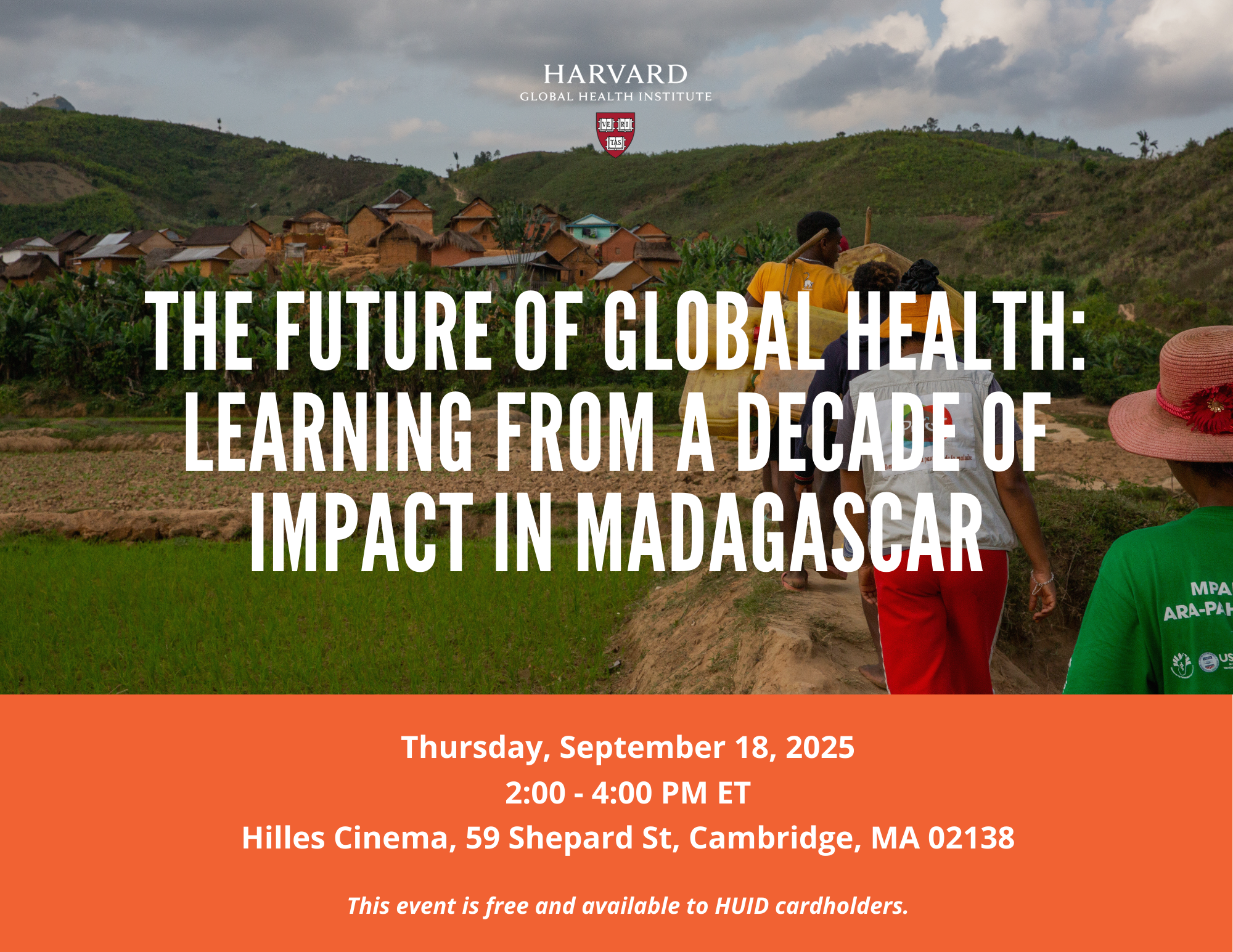
59 Shepard St., Cambridge, MA, United States This event invites you into a critical conversation on the impacts of global health interventions in a changing funding landscape through the example of Pivot, a nonprofit organization working in Madagascar since 2014 to strengthen the public health system, improve access to high quality care, and save lives in one of the world’s most under-resourced regions. Over the past decade, Pivot’s community-driven, science-backed approach has contributed to significant drops in maternal and child deaths, while doubling the likelihood that families seek care when they need it. Drawing on this real-world impact, Pivot’s experience with the Madagascar government offers lessons on how humility, partnership, and science can rebuild trust and improve outcomes at a fragile moment for global health. Join us for a presentation of Pivot’s impact data followed by a panel discussion with frontline clinicians, policy-makers, and researchers to explore these innovative approaches and hear directly from leaders shaping the future of global health delivery. We will have time for your questions and meaningful dialogue. Light refreshments will be provided. This event highlights the work of Matt Bonds, drawing on his experience as a former Burke Fellow and current faculty member at Harvard Medical School. The program will focus on his research and related initiatives at Pivot, the non-profit organization he co-founded. Please note that all speakers are presenting in their personal capacities; they do not speak for Harvard University, and their participation does not imply the University's endorsement of their views or affiliated organizations. This event is free and available to HUID cardholders and in person only. A recording will be shared post event. Register
Featured Speakers & Panelists Matthew Bonds, Ph.D
Co-founder of Pivot; Associate Professor at Harvard Medical School
Matthew Bonds is an associate professor of global health and social medicine at Harvard Medical School, cofounder of Pivot, and former Burke Fellow. He has a PhD in economics and a PhD in ecology and is broadly interested in complex systems in health and economic development. His research includes mathematical and statistical modeling of coupled human-ecological systems, as well as field-based implementation science. Pivot partners with the Madagascar government to establish a model system of healthcare in a region of one million people. With novel data systems at all levels of care (community, primary and secondary), the partnership aims to lead a science of health system transformation.
Carole Mitnick, ScD
Professor, Global Health and Social Medicine, Harvard Medical School
Dr. Mitnick has worked for more than 25 years to increase access to high-quality, appropriate treatment for TB, especially for drug-resistant TB. Together with collaborators and mentees around the world, she leverages research, training, policy, programmatic support, activism, and advocacy to advance global health equity. She also works to improve our understanding of post-TB lung impairment. Dr. Mitnick is also Senior Research Associate at Partners In Health and Associate Epidemiologist in the Division of Global Health Equity at Brigham & Women’s Hospital. She received her doctoral training in international health epidemiology and ecology at the Harvard TH Chan School of Public Health.
Luc Hervé Samison, MD
Pivot Steering Committee Chair; President of the Global Fund Country Coordinating Mechanism
Luc Hervé Samison is a distinguished physician and health leader in Madagascar. He currently serves as President of the Country Coordinating Mechanism for the Global Fund grant in Madagascar and as Director of the Centre d’Infectiologie Charles Mérieux. Formerly the Dean of the Faculty of Medicine at the University of Antananarivo, Professor Samison brings decades of expertise in medicine, surgery, and infectious diseases to his roles. Since joining the Pivot Board in February 2021, he has contributed invaluable insights, having closely followed Pivot’s work from its inception. Professor Samison has played a pivotal role in advancing the district-level health system model that now informs Madagascar’s national universal health coverage strategy. Deeply committed to addressing critical challenges in health care, he is particularly passionate about improving the retention of trained clinical staff in rural health centers — a pressing issue for both Pivot and the country at large. Professor Samison’s leadership continues to inspire meaningful progress toward equitable health care access in Madagascar.
Luc Rakotonirina
Pivot Deputy Country Director
Luc Rakotonirina joined Pivot in 2014. A trained nurse and paramedic, he was a member of Pivot’s founding clinical team. Luc currently serves as Pivot's Deputy Country Director, where he oversees strategic relationships with the Ministry of Public Health and provides day-to-day support for clinical teams. Luc played a key role in establishing Madagascar’s first 24/7 public ambulance network — an accomplishment that has been recognized at the national level by the Ministry of Health — and was instrumental in shaping the 2022 national community health guidelines which cemented Madagascar's progress toward a professionalized community health workforce.
Moderator Joia S. Mukherjee, MD, MPH
Chief Medical Officer, Partners In Health; Director and Advisory Dean, F.W. Peabody Society; Director, Master in Medical Science in Global Health Delivery, Harvard Medical School; Associate Professor of Medicine, Brigham and Women’s Hospital
Dr. Joia Mukherjee is an associate professor in the Division of Global Health Equity at Brigham and Women’s Hospital and in the Department of Global Health and Social Medicine at Harvard Medical School. She leads the Master of Medical Sciences in Global Health Delivery and the Program in Global Medical Education and Social Change. Since 2000, Dr. Mukherjee has been the chief medical officer at Partners In Health, where she provides strategic oversight for clinical programs across sites in Haiti, Rwanda, Malawi, Lesotho, Peru, Mexico, Russia, Sierra Leone, and Liberia. She has advised the WHO and numerous Ministries of Health on HIV, TB, health systems strengthening, and workforce development. Dr. Mukherjee also serves on the boards of Village Health Works (Burundi), Muso (Mali), and the Institute for Justice and Democracy in Haiti.
About the Harvard Global Health Institute
The Harvard Global Health Institute (HGHI) is an interfaculty initiative that facilitates collaboration across the Harvard community and partners worldwide to advance global health equity. We tackle the greatest health challenges of our time through innovative transdisciplinary research, education, and partnerships that build knowledge and drive positive change in global health.