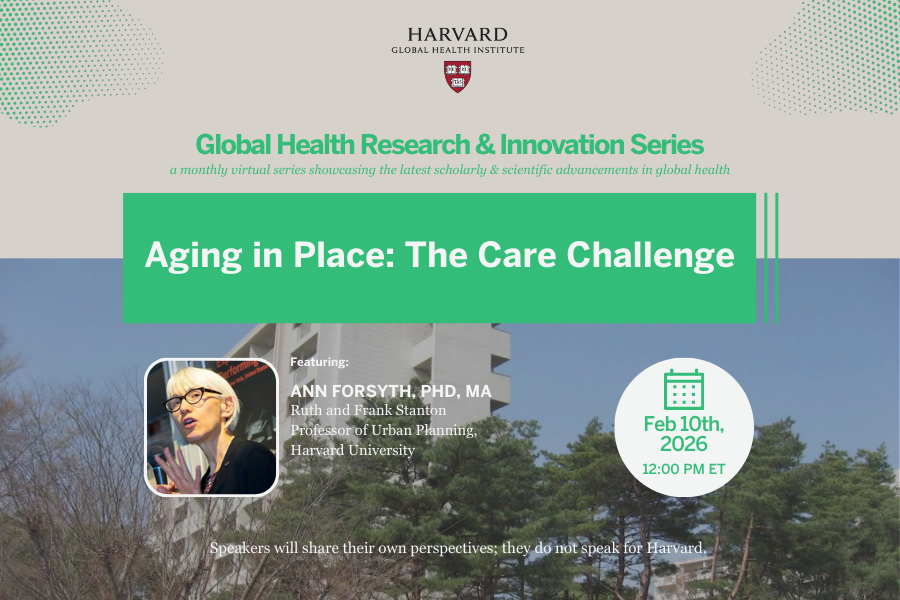
RECORDING: Aging in Place: The Care Challenge
In this talk, Professor Ann Forsyth explores how the built environment can support older adults who wish to remain in their homes and communities as they age.



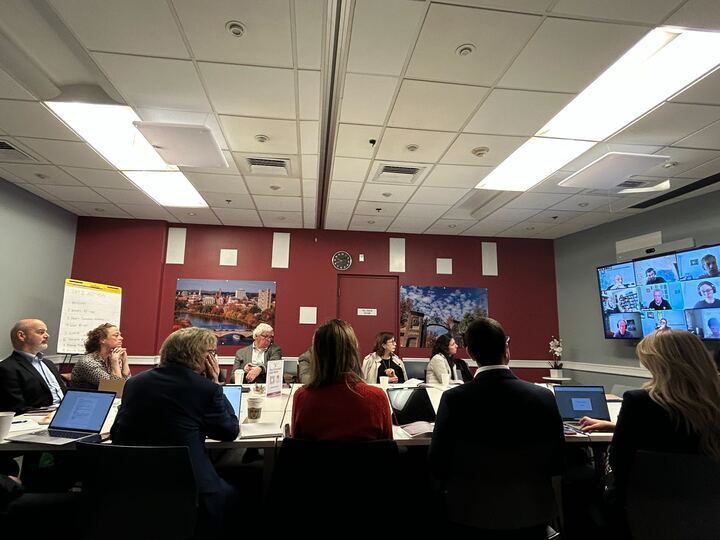
The Harvard Global Health Institute (HGHI) is pleased to announce its newest cohort of Scholarly Working Groups (SWGs). Now entering its second year, the Scholarly Working Group program is poised to strengthen interdisciplinary collaboration across Harvard and beyond, bringing together faculty, researchers, and practitioners to tackle pressing global health challenges through sustained dialogue, research, and innovation.
Faculty Leads
Project Description
Focused on addressing global rising temperatures and the research and policy gaps that leave 2 billion workers around the world vulnerable, this working group will be assessing the efficacy and economic impacts of heat adaptation measures such as cool roofs, heat insurance, worker rest breaks and sanitation measures, and flexible work-times. The assessment will include comparing worker heat protections and regulations across major global economies and examining national and local approaches, with a special focus on improving protections for informal, migrant, and undocumented workers. This project will leverage the cross-disciplinary expertise of collaborators from Harvard’s Medical, Law, Public Health, and Design Schools; leading global institutions such as the University of Oxford, BRAC University, the University of Thessaly, and the University of California, Los Angeles; as well as organizations including the Self-Employed Women’s Association (SEWA), the Atlantic Council, and the Ford Foundation.
Faculty Lead
Project Description
This scholarly working group aims to address the multifaceted challenges facing adolescents in Sub-Saharan Africa (SSA). Threats to health in the region, including food insecurity and economic instability, are exacerbated by unpredictable growing seasons, prolonged droughts, and economic pressures, which reduce agricultural yields and access to nutritious food. Adolescents are uniquely impacted, with malnutrition impairing their physical, cognitive, and mental health, while social inequalities expose girls to greater risks like anemia, and boys to being pulled from school for labor. Despite these dire consequences, adolescents remain largely invisible in research and policy. The project will work to build a multidisciplinary, community-engaged framework that bridges research, policy, and practice to address the interconnected challenges facing adolescents in SSA, with a focus on food security, nutrition, health, and education and a recognition of adolescents as key agents of change.
For more information about the program and past cohorts, please visit our Scholarly Working Groups webpage.
In this talk, Professor Ann Forsyth explores how the built environment can support older adults who wish to remain in their homes and communities as they age.
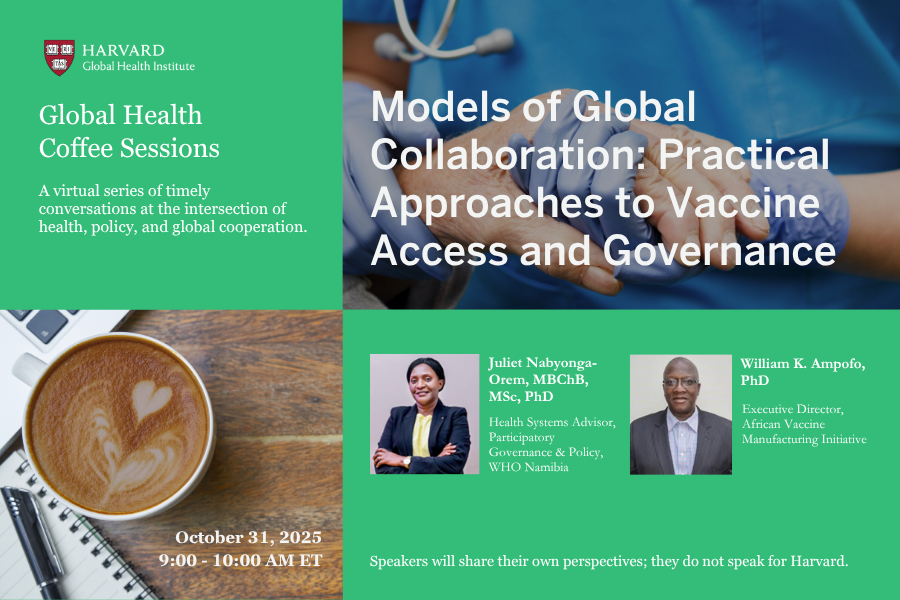
This panel explores how nations are advancing local vaccine manufacturing to accelerate health equity, offering insights into what national ownership looks like for vaccine development and distribution today, especially as traditional donor support declines.
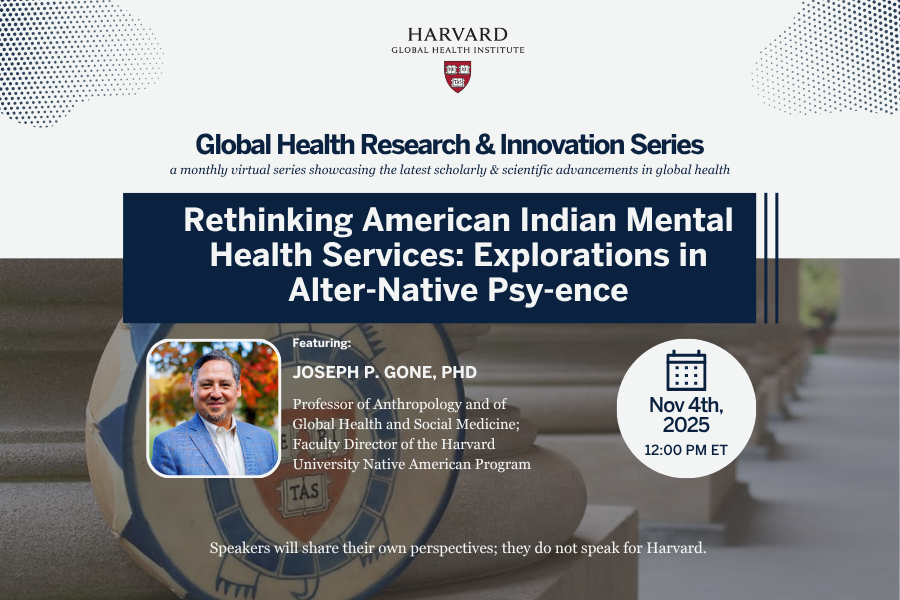
In this talk, Professor Joseph P. Gone explores how Indigenous perspectives can reshape understandings of mental health, challenging Western psychiatric frameworks and reframing “mental health” concerns as postcolonial disorders.