

How Urban Planning Plays a Vital Role in Supporting Older Adults Aging in Place
As populations age worldwide, a growing number of older adults express a strong desire to remain in their homes and communities rather than move into institutional care. Yet longer life expectancy, shrinking families, geographic mobility, and constrained public resources raise urgent questions about how care can be delivered effectively and equitably.
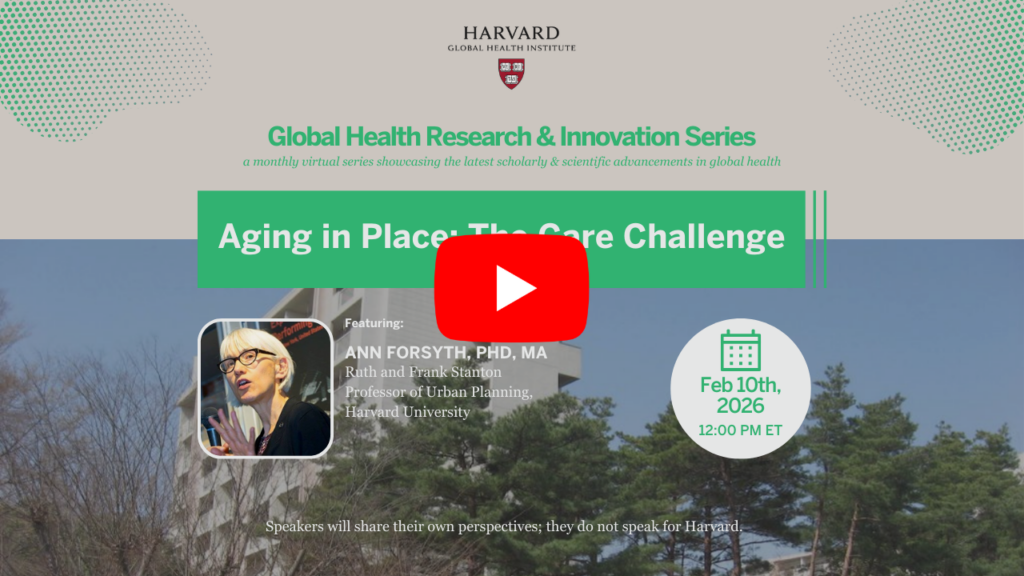
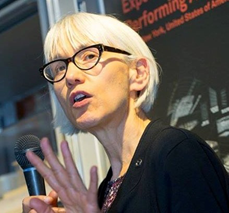
In her talk, “Aging in Place: The Care Challenge,” Professor Ann Forsyth, Ruth and Frank Stanton Professor of Urban Planning at the Harvard Graduate School of Design, explored how the built environment can play a vital role in supporting older adults who wish to age in place. Moving beyond traditional approaches focused primarily on health care delivery and workforce shortages, she examined how homes, neighborhoods, public spaces, and infrastructure can help meet the complex care needs of an aging population.
Professor Forsyth emphasized that addressing the care challenge will require multiple strategies, including health promotion, workforce development, mutual support networks, assistive technologies, and thoughtful urban planning. She highlighted how physical environments can foster independence, safety, mobility, social connection, and well-being, while also supporting caregivers and community-based care systems.
Designing Care Beyond the Family: Policy, Planning, and Mental Well-Being in an Aging World
Professor Forsyth noted that caringfor older people as lives lengthen, families shrink and disperse, and governments struggle to fund support, is one of the major challenges of coming decades.
“Addressing it will require multiple strategies as I outlined in the talk: improving health so older people can care for themselves for longer, finding ways to increase the workforce involved in care, supporting older people as they care for each other, using technologies to help older people and their caregivers,¹ and improving environments such as homes, public spaces, and neighborhoods,” she explained. “Older people, and those involved with their care, will likely use all of these strategies alone or in combination over time as the situation evolves.”
In terms of environments, Forsyth said there is much to do. “One common idea is to focus on making supportive environments to compensate for limitations that arise over time,” she said. “However, environments have other functions, such as providing challenges to maintain fitness, as well as providing personal meaning and pleasure.”
In the domain of urban planning, specific ideas include fostering multiple housing options to fit people’s needs and preferences over time, making it easy to get around through transportation, and providing accessible open spaces.² New technologies embedded in the environment—like smart street crossings—can help with safety and mobility beyond the home. Forsyth said there are a lot of existing models.
Loneliness, Social Isolation, and Living Alone
Forsyth emphasized that the link between planning and better aging can be subtle. One example is how neighborhoods could be planned to reduce loneliness among older people. It is important to distinguish between concepts that are often confused.³ One is loneliness, which is an unwelcome perception that the quality and quantity of a person’s relationships are lacking. A second is social isolation, which is an observable lack of social attachments. People can be socially isolated and not lonely. A third issue is living alone, which is high among older people. Finally, there are some more positive concepts like solitude. While many people are lonely, it is increasingly a problem of the young.⁴ However, while generally loneliness decreases with age, reporting may mask higher rates among the oldest old who deal with the loss of friends and family over time.
As loneliness is a feeling or perception, Forsyth said it is not always related to the observable environment. In a review of studies about neighborhoods, loneliness, and older people, she and her co-author Yingying Lyu identified easy access to transportation as one of the strategies that could reduce loneliness. This might include nearby bus service and door-to-door options, including in rural areas. But Forsyth noted that, in research up to the time of the review, many other environmental dimensions did not have a clear effect on loneliness, including housing type and urban versus rural residence. However, perceptions did matter, such as perceived walkability.
“Overall, as the population ages, we will need a collection of approaches to address the care challenge,” Forsyth concluded.
References
- Yingying Lyu and Ann Forsyth, “Technological Devices to Help Older People beyond the Home: An Inventory and Assessment Focusing on the Neighborhood and City Scales,” Cities & Health 8, no. 1 (2024): 91–106. https://doi.org/10.1080/23748834.2022.2094884
- Ann Forsyth et al., “Improving Housing and Neighborhoods for the Vulnerable: Older People, Small Households, Urban Design, and Planning,” Urban Design International 24, no. 3 (2019): 171–86. https://doi.org/10.1057/s41289-019-00081-x
- Yingying Lyu and Ann Forsyth, “Planning, Aging, and Loneliness: Reviewing Evidence About Built Environment Effects,” Journal of Planning Literature 37, no. 1 (2022): 28–48. https://doi.org/10.1177/08854122211035131
- World Health Organization, “WHO Commission on Social Connection,” accessed February 19, 2026. https://www.who.int/groups/commission-on-social-connection
Resources
Event Recording