RECORDING: Aging in Place: The Care Challenge
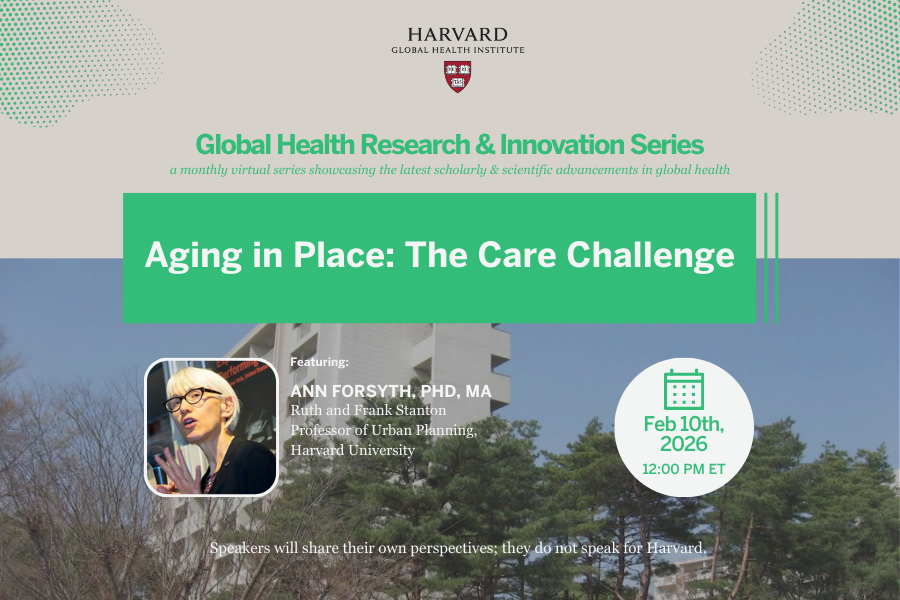
In this talk, Professor Ann Forsyth explores how the built environment can support older adults who wish to remain in their homes and communities as they age.




September 29th, 2025, marks the 25th anniversary of World Heart Day, an initiative to raise awareness, inspire action, and celebrate heart health. Despite rapid medical advances in the last few decades, cardiovascular disease (CVD) remains the leading cause of death worldwide, claiming 19.8 million lives in 2022, or about 32% of all global deaths, according to the World Health Organization. Having done extensive research on the history of cardiology and cardiac care in both the United States and India, David Jones, M.D., Ph.D., A. Bernard Ackerman Professor of the Culture of Medicine Institution at Harvard Medical School and the Faculty of Arts and Sciences, believes that it would take both personal and societal efforts to reduce the number of CVD deaths.
In the US, CVD deaths peaked in 1950, killing about one-third of all Americans. The decline that followed has been attributed to a combination of increasing public awareness and advancement in medicine, among other factors.
“Eisenhower’s heart attack in 1955 garnered a lot of public attention,” said Jones. “People started to get a better understanding of the risks of heart disease and how we may help prevent it. At the same time, scientists have developed more advanced treatments for the disease, including medications and surgeries.”
According to a recent study in the Journal of the American Heart Association, “the overall age‐adjusted heart disease mortality decreased by 66% from 1970 to 2022 (from 761 to 258 per 100,000).”
“The mortality rate from coronary artery disease is now down by about 70% from its peak,” Jones said. “And yet it is still the leading cause of death in the US. Should we be celebrating our achievements or should we be appalled that there are hundreds of thousands of Americans dying of heart disease every year? I think we should be both.”
He cautioned that other countries will likely face similar trends as they experience rising incomes, shifting diets, and worsening environmental exposures. India and China, with their large populations, already bear the highest burden.
While researching for his upcoming book on the history of cardiac care in India, Jones recognized that there are similarities to the US as well as lessons we could learn from the South Asian country.
From a bird’s-eye view, the development of cardiac care in India mirrored major changes in the US. In 1950, there were no cardiac surgeons and no cardiology departments in Indian hospitals. But heart disease was quickly becoming a major health threat. That prompted the Indian physicians and the Indian government to figure out a way to build capacity to treat the disease.
“With the creation of Medicare and Medicaid in 1965, cardiac surgery in the US expanded rapidly,” Jones said. “But because the Indian government did not have the resources to support such expansion in their health system, India’s cardiac care grew primarily through the private sector, especially after the 1980s. Today, India has some of the most experienced cardiac surgeons in the world, with quality of care that rivals the United States, fueling booming medical tourism.”
Jones explained that, because of the privatization of its healthcare system, access to cardiac care in India remains deeply unequal, creating high-quality care for some but limited access for many.
The World Heart Federation estimates that up to 80% of heart disease is preventable. Jones acknowledged that although we have a great understanding of prevention and excellent treatments, experts now predict that more people will die from heart disease in the 21st century than in the last century.
“Prevention of coronary heart disease requires more than diet, exercise, and smoking cessation,” Jones said. “It isn’t just about the choices an individual makes but also structural changes, including policies that make healthy foods affordable and accessible, make neighborhoods safer for exercise, and reduce harmful environmental exposures, especially air pollution.”
The persistence of rheumatic heart disease in low-income settings is another troubling fact. In the U.S. and other wealthy countries, it was virtually eliminated by treating streptococcal infections with penicillin. Elsewhere, untreated cases sometimes progress to fatal complications decades later.
“This is almost 100% preventable,” Jones explained. “But only with access to basic pediatric care and antibiotics.”
Successful disease control requires both prevention and treatment. Tobacco control remains critical, as smoking continues to drive cardiac mortality. Affordable access to essential medicines, such as blood pressure drugs and cholesterol-lowering medications, can dramatically reduce deaths. India has begun experimenting with low-cost public provision of the “polypill,” a single pill that combines aspirin, a statin, and anti-hypertensives. Initial studies have been promising: giving a polypill to all people over age 55, regardless of whether they have been diagnosed with CAD, can reduce cardiac mortality.
Many Indian cardiologists also believe that approaches such as yoga, meditation, and ayurveda can also support heart health. If these prove to be valuable, Jones noted, then they must be made accessible to everyone.
On this World Heart Day, Jones stressed the lessons of both gratifying progress and frustratingly persistent inequities. Heart health is not only a personal responsibility, but also a shared societal commitment. From tobacco control to affordable medicines, from stronger emergency systems to healthier environments, the challenge ahead is to ensure that the full benefits of modern heart care reach every community.
You can read more about the history of cardiac care in the US in Jones’ book, Broken Hearts: The Tangled History of Cardiac Care (Johns Hopkins University Press, 2014).
In this talk, Professor Ann Forsyth explores how the built environment can support older adults who wish to remain in their homes and communities as they age.
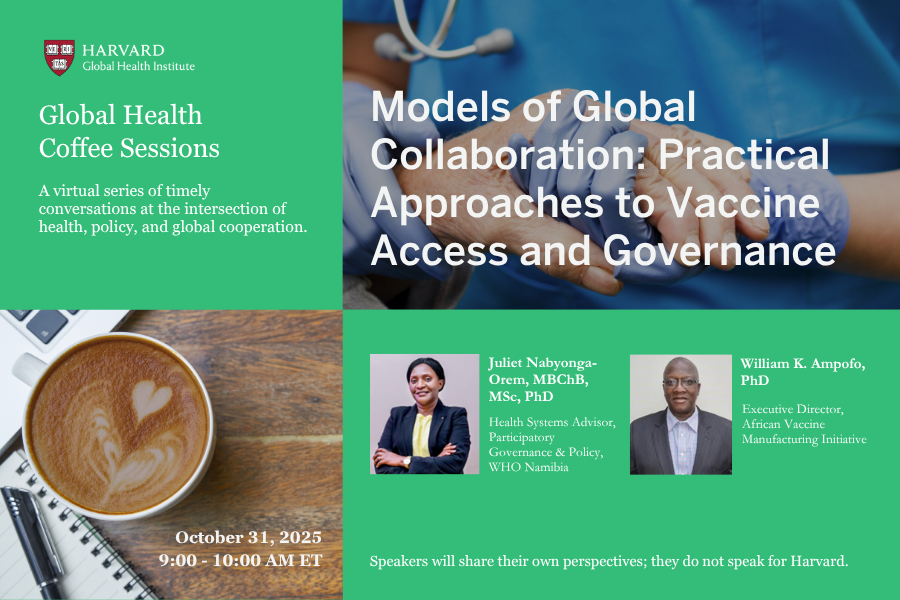
This panel explores how nations are advancing local vaccine manufacturing to accelerate health equity, offering insights into what national ownership looks like for vaccine development and distribution today, especially as traditional donor support declines.
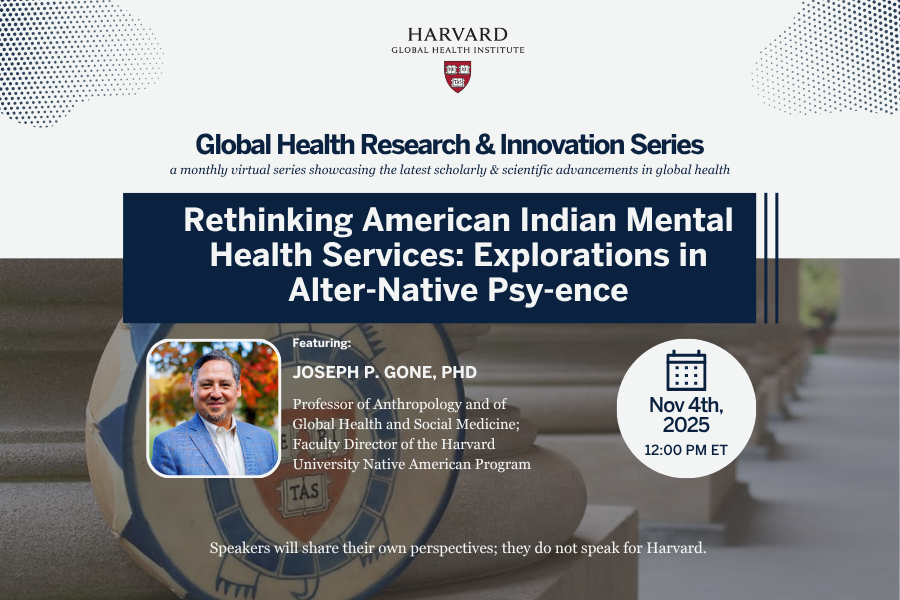
In this talk, Professor Joseph P. Gone explores how Indigenous perspectives can reshape understandings of mental health, challenging Western psychiatric frameworks and reframing “mental health” concerns as postcolonial disorders.