
Harvard Undergraduates Immerse Themselves in Global Health Research and Community
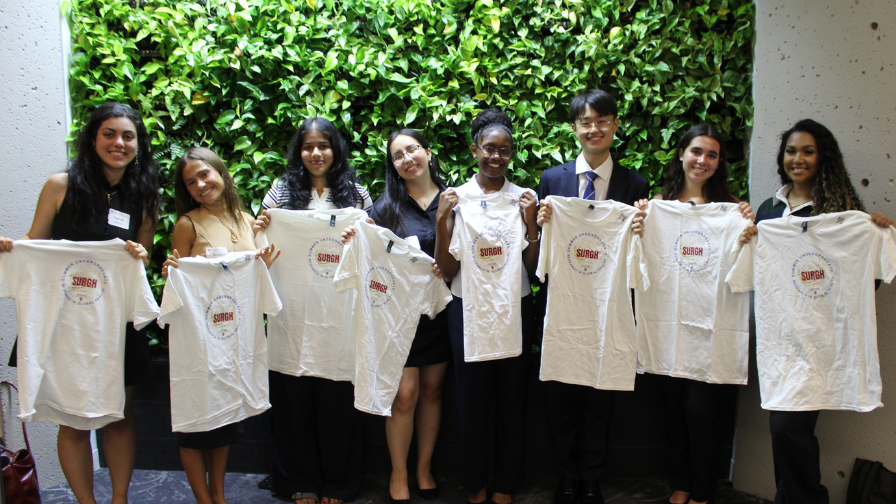
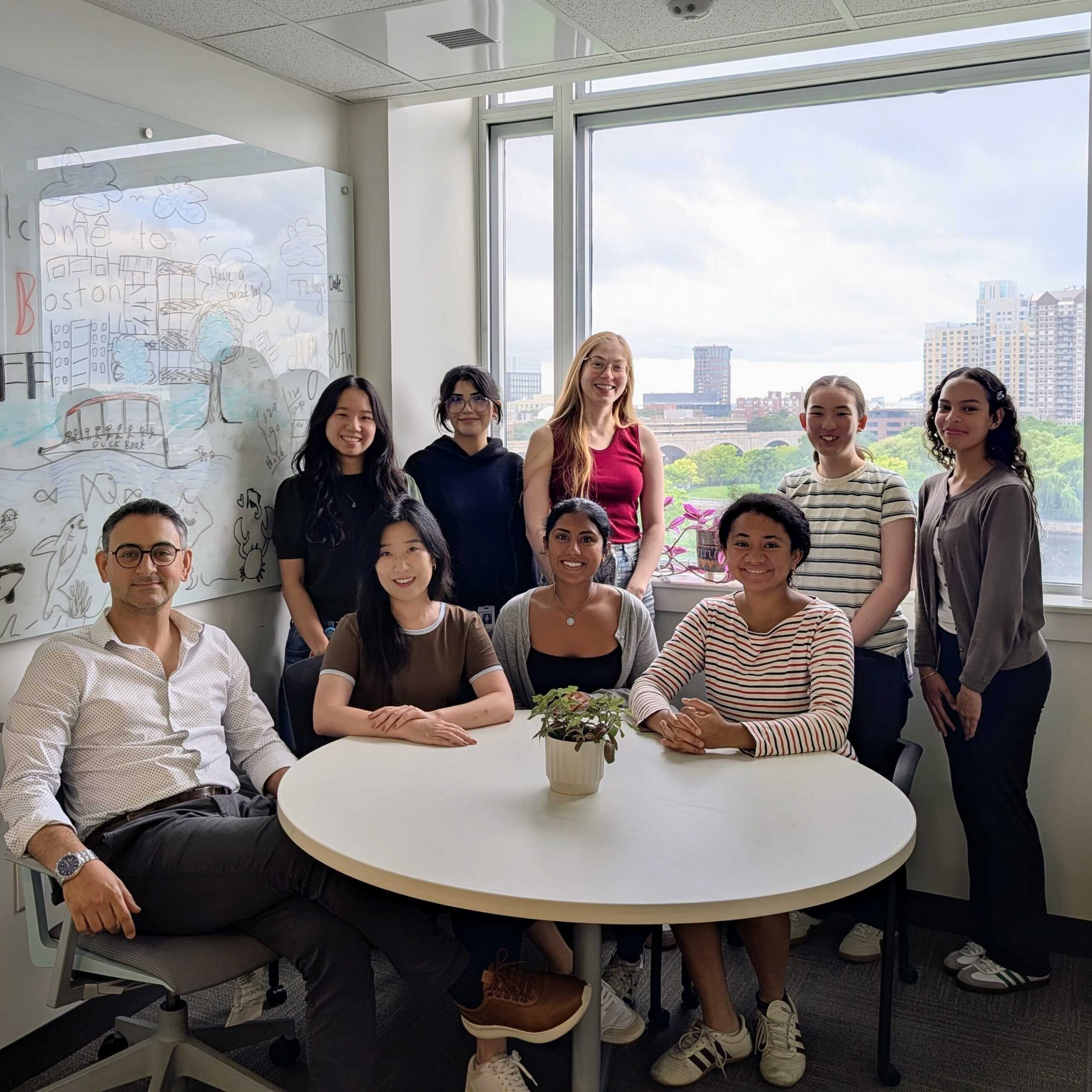
This summer, nine Harvard undergraduates spent eight weeks immersed in global health research through the Harvard Global Health Institute’s Summer Undergraduate Research in Global Health (SURGH) program, working with Harvard faculty, researchers, clinicians, and partner organizations across the Boston area.
The 2026 cohort explored global health challenges spanning antimicrobial resistance, mental health, urban health, health systems, quality improvement, cardiovascular disease, infectious diseases, health equity, and prevention. Their work offered a window into the breadth of global health research and the range of approaches needed to address complex health challenges across populations and settings.
The students conducted research with internship partners at the Rubin Lab, Mental Health for All, the Harvard Urban Health Initiative, the International Quality Improvement Collaborative, the Ragon Institute of Mass General Brigham, MIT, and Harvard, the Office of Community Centered Medical Education, Mass General, the MJ Lab, and the MGH Global Enterics Laboratory.
The summer culminated in the Harvard Summer Undergraduate Research Village (HSURV) Poster Session, where the students presented their research and reflected on the experience.
From Antimicrobial Resistance to Health Systems
Nafisa Zaman ’28 at the Global Enterics Laboratory
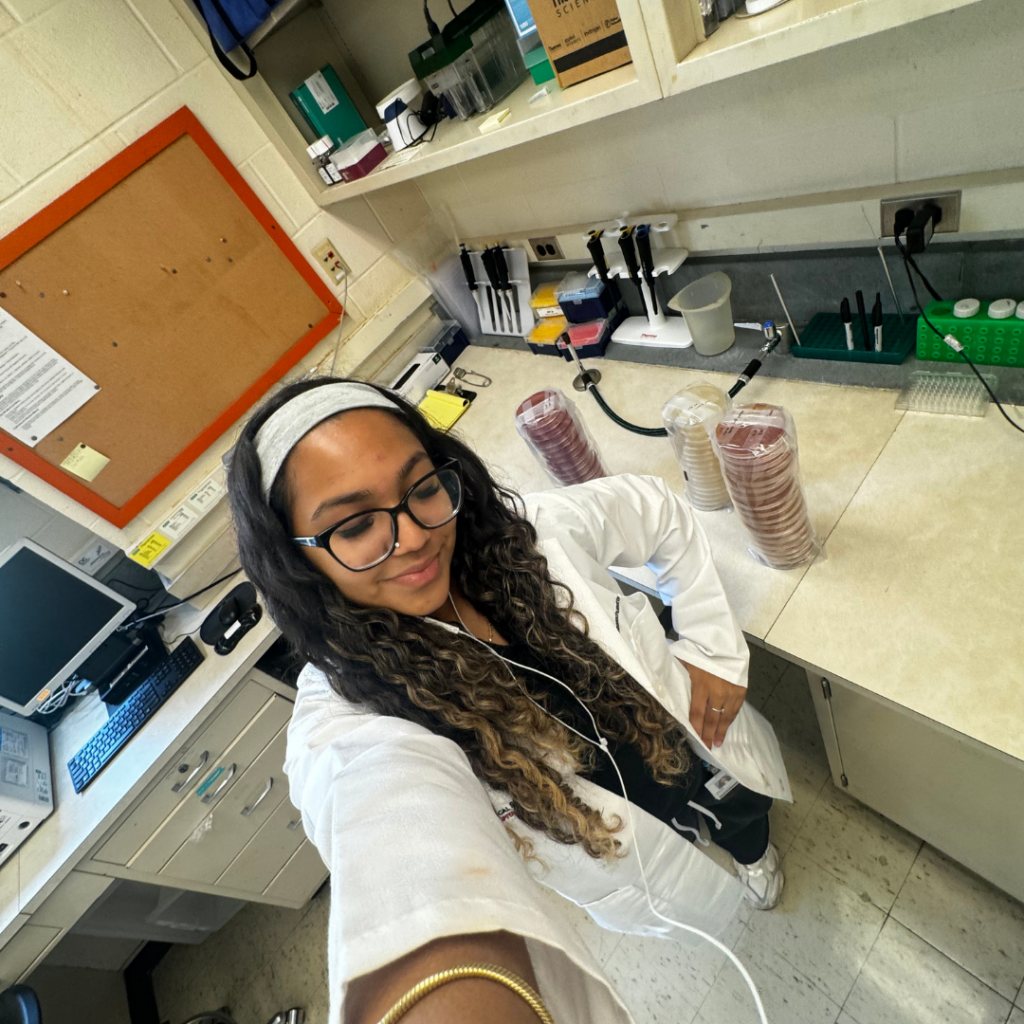
At the Global Enterics Laboratory at Massachusetts General Hospital, student intern Nafisa Zaman researched antimicrobial resistance in pre-term infants in the neonatal intensive care unit. She screened stool samples for extended-spectrum beta-lactamase (ESBL)-producing enteric bacteria, culturing, processing, and plating more than 60 samples each week and analyzing the resulting growth. ESBL-producing bacteria produce enzymes that can inactivate many commonly used beta-lactam antibiotics, making infections caused by these organisms more difficult to treat. This is particularly concerning in NICU settings, where pre-term infants are especially vulnerable to infection.
The project also broadened Zaman’s understanding of global health. She had previously associated the field primarily with infectious diseases and illness, but working on antimicrobial resistance showed her another way of approaching global health challenges. The laboratory has also worked on projects with partners in Bangladesh, where Zaman’s family is from, giving her a personal connection to the possibility that research could contribute to improving health outcomes there.
“I learn best by doing, so getting to actively work with the samples and then see the results of my own work made everything feel real. It was really exciting to realize that something I was doing at the bench could contribute to a much bigger question about antimicrobial resistance and, potentially, help children in places like Bangladesh.”
Zaman also expressed her gratitude to the mentors who supported her throughout the summer: “A huge thank you to my mentor, Dr. Damien Slater, and my PIs, Dr. Jason Harris and Dr. Regina LaRocque, for being so supportive throughout the summer!”
Jia Michel ’29 at the MJ Lab
Student Intern, Jia Michel worked in the MJ Lab at the Center for Health Technology Assessment at Harvard Medical School/Mass General Brigham. During the first weeks of the summer, she contributed to a grant proposal examining substance use policies in U.S. high schools, helping to review and classify national policies and supporting the grant’s peer review process.
She then transitioned to a project examining the Ethiopian healthcare system through system dynamics modeling. The existing model focused on financial support systems, including Community-Based Health Insurance, for Ethiopians living with hypertension and diabetes. Michel developed a new layer examining how lifestyle factors and risk factors such as smoking and obesity could influence the development of cardiovascular disease. Her work involved literature reviews, systems dynamics modeling, and the use of Vensim, and she ultimately presented her research in an abstract and poster.
The experience also introduced Michel to the collaborative community surrounding global health research. She worked closely with mentors and colleagues, contributed to new research ideas, and gained confidence in contributing to grant development and research projects.
“My advice would be to ask questions, listen, and do not be afraid to contribute ideas. I initially was less knowledgeable of global health, but I am now ready to take on any new research project. The concentration of knowledge in the lab that you go to is unmatched, and only through dedicating yourself to the experience can you fully take advantage of your summer.”
Connecting Across Research Experiences
The SURGH experience gave students the opportunity to contribute to ongoing research while exploring the questions, methods, and areas of global health they may want to pursue in the future.
Across the cohort, students gained experience working with research teams, presenting scientific findings, adapting when projects changed direction, and learning from mentors and colleagues. For many, the summer also provided an opportunity to think more closely about how research might fit into their future careers.
The HSURV Poster Session marked the culmination of eight weeks of research, giving students the opportunity to share their work with the Harvard community and reflect on what they had learned.
Congratulations to Mieti Adi, Nadia Borja, Ana Cabrera Antkowiak, Lia Galindo, Marvel Hanna, John Kim, Merissa Lawrence, Jia Michel, and Nafisa Zaman on an impactful summer of global health research, learning, and community.
To learn more about the Harvard Global Health Institute’s Summer Internship Program, please visit our student engagement webpage.