RECORDING: Aging in Place: The Care Challenge
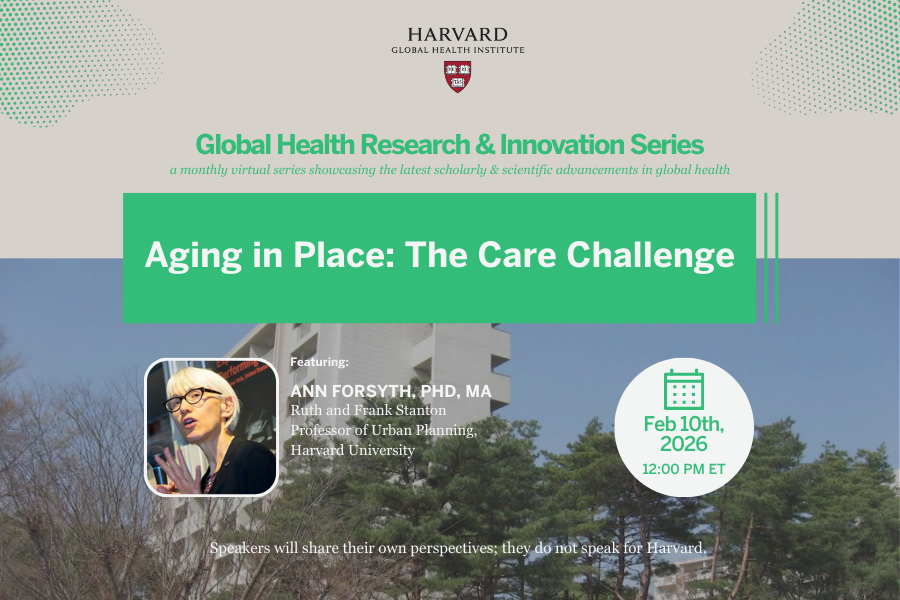
In this talk, Professor Ann Forsyth explores how the built environment can support older adults who wish to remain in their homes and communities as they age.



A new letter published in The Lancet, “Global donor funding for COVID-19 was largely disbursed as loans: it’s time to adjust,” co-authored by Jehane Sedky, Executive Director, FXB Center for Health & Human Rights at Harvard University; Abbey Gardner, Executive Director, Science of Implementation Initiative; and Dr. Louise Ivers, Faculty Director, Harvard Global Health Institute, examines how global COVID-19 aid was delivered—and what the data reveal about the state of international solidarity. The analysis draws on a comprehensive study recently released by Jehane Sedky and Abbey Gardner in close collaboration with Dr. Louise Ivers and Mr. Habib Mayar of the g7+.
Between 2020 and 2022, the authors found that out of the $170.9 billion disbursed in global COVID-19 assistance, 60 percent was issued as loans, while less than nine percent reached partner governments as grants.
Reaching these figures was far from straightforward: publicly available estimates of COVID-19 funding ranged from $136 billion to $21 trillion, exposing how fragmented and opaque global aid data remains. The analysis calls for improved transparency and real-time reporting of official development assistance to strengthen donor accountability and national planning.
“Our new analysis of COVID-19 donor funding reveals a profound disconnect between the rhetoric of global solidarity and the reality: most official development assistance was issued as loans, and direct support to partner governments was minimal. The absence of timely reporting underscores a major accountability gap, undermining aid effectiveness commitments.”
As global development budgets contract, the authors emphasize that these lessons are more urgent than ever. Transparent, predictable, and government-aligned aid systems are essential if countries are to respond to future crises with clarity and confidence.
In this talk, Professor Ann Forsyth explores how the built environment can support older adults who wish to remain in their homes and communities as they age.
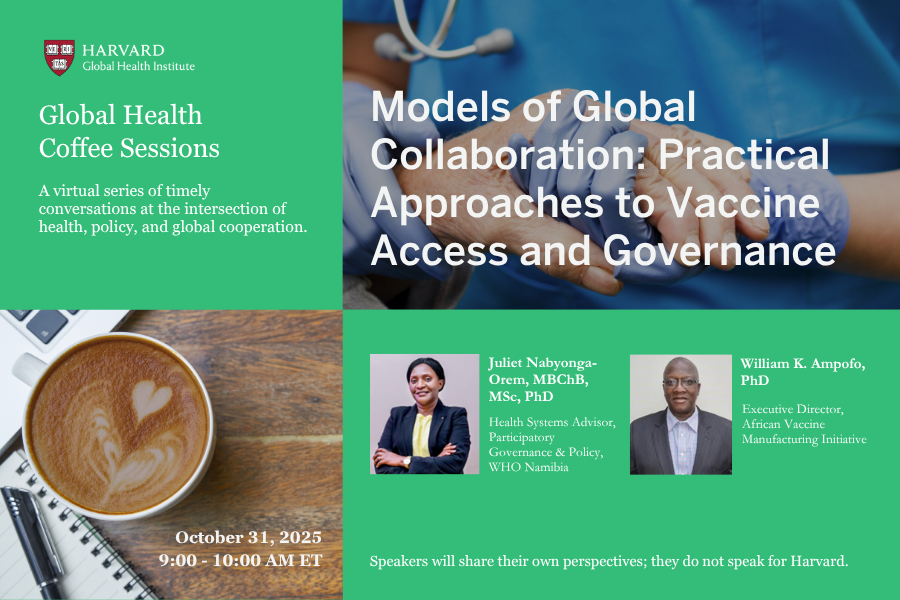
This panel explores how nations are advancing local vaccine manufacturing to accelerate health equity, offering insights into what national ownership looks like for vaccine development and distribution today, especially as traditional donor support declines.
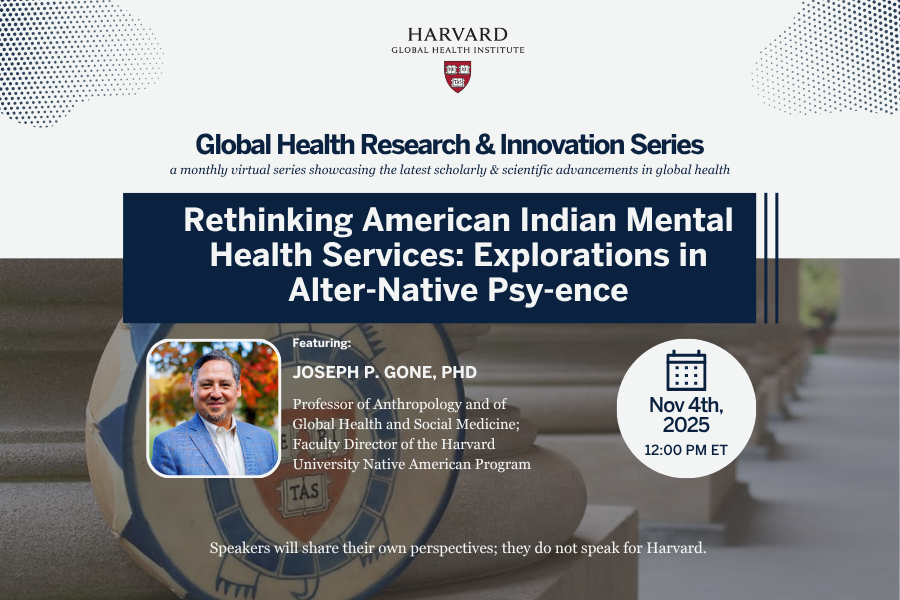
In this talk, Professor Joseph P. Gone explores how Indigenous perspectives can reshape understandings of mental health, challenging Western psychiatric frameworks and reframing “mental health” concerns as postcolonial disorders.