A Student's Reflection on Tuberculosis Research: Inside the Rubin Lab
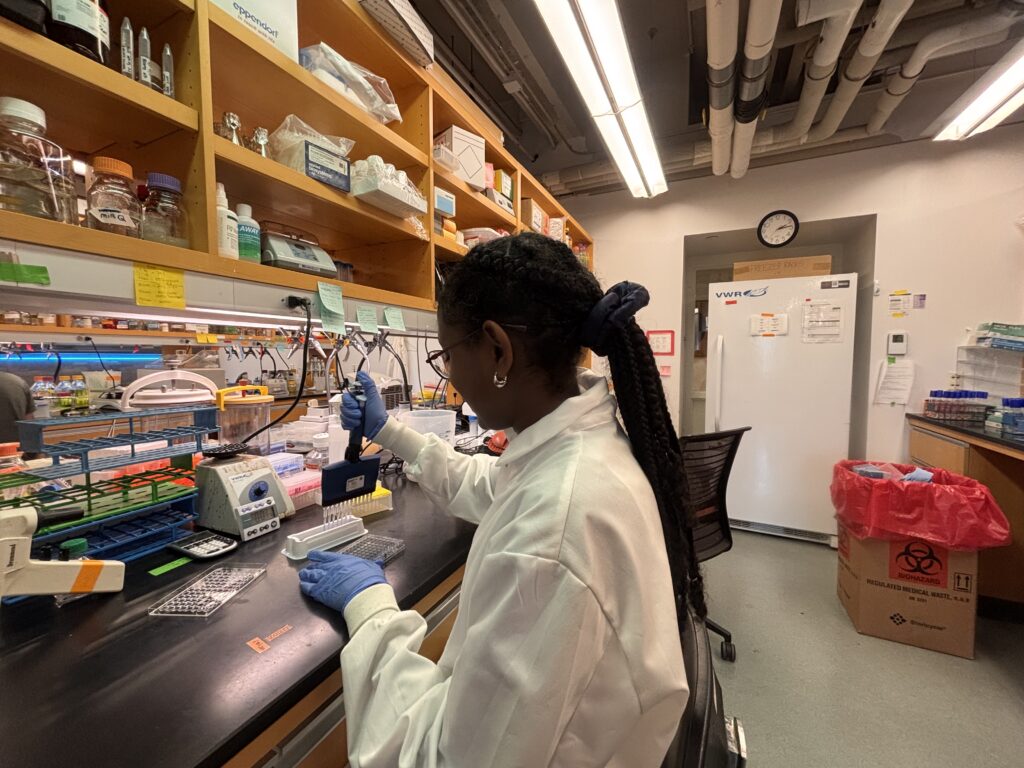
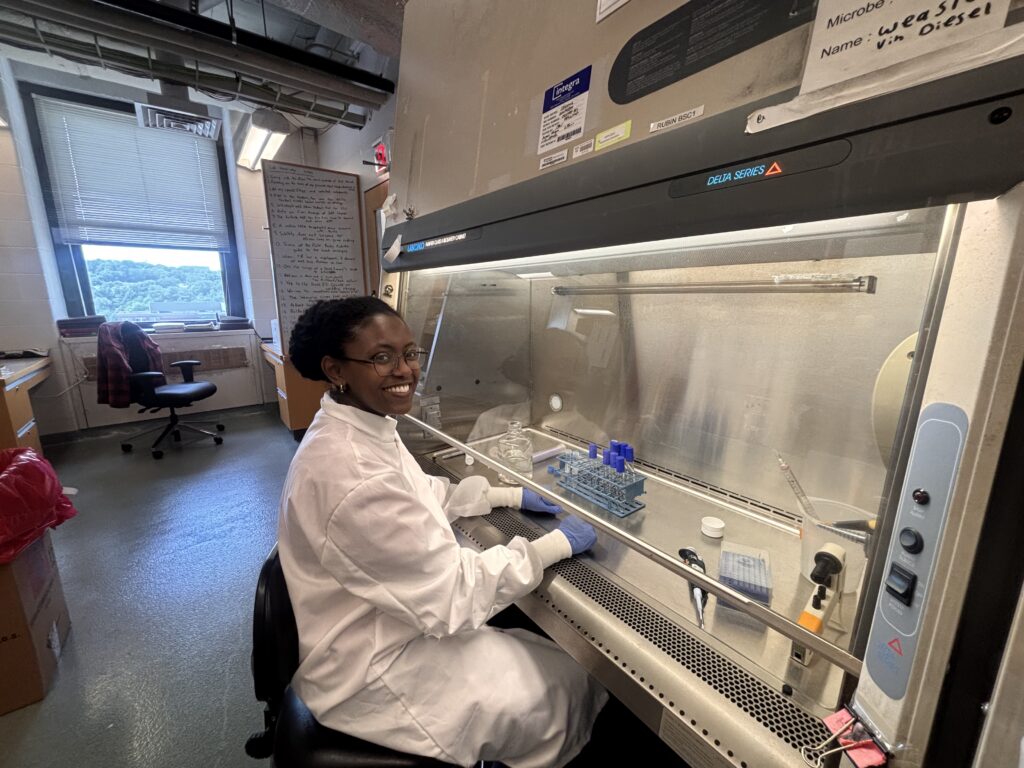
This summer, Harvard Global Health Institute (HGHI) Summer Undergraduate Research in Global Health (SURGH) intern Mieti Adi is gaining hands-on laboratory experience at the Rubin Lab at the Harvard T.H. Chan School of Public Health, where she is contributing to research that could help advance future treatments for tuberculosis (TB).
Tuberculosis remains one of the world’s leading infectious disease killers, claiming more than one million lives each year. The Rubin Lab studies the biology of mycobacteria and their interactions with the host to better understand the disease and support the development of new therapies. As part of the SURGH program, undergraduate researchers work with non-pathogenic model organisms that allow scientists to investigate questions relevant to tuberculosis safely while developing skills in experimental design, laboratory techniques, and data analysis.
Mieti, a rising sophomore concentrating in Human Evolutionary Biology with a secondary in Global Health and Health Policy, joined the Rubin Lab to deepen her interest in infectious disease research while exploring the intersection of science and global health.
This summer, her project focuses on understanding how mycobacteria develop resistance to an experimental drug candidate known as DDD806905. Specifically, she is investigating how different versions of the metK gene influence the survival of Mycobacterium smegmatis, a non-pathogenic model organism widely used in tuberculosis research. By studying these mechanisms, researchers can better understand how resistance develops and help inform the future development of new TB therapies.
“As I prepare to collect and analyze data for my final poster presentation, I am excited for the opportunity to contribute to the development of improved treatments for tuberculosis, a disease that continues to disproportionately burden vulnerable communities and developing countries, including my home country of Ethiopia,” Mieti said. “This work is especially meaningful because it combines my passion for addressing global health inequities with my growing curiosity about immunology and infectious disease research.”
Over the remainder of the summer, Mieti looks forward to strengthening her skills in laboratory research and immunology while contributing to work with the potential to improve health outcomes on a broader, global scale.
Learn more about where our interns are working this summer by visiting our 2026 cohort page.