Integrating Science, Data, and Implementation: Lessons from Health Interventions in Madagascar
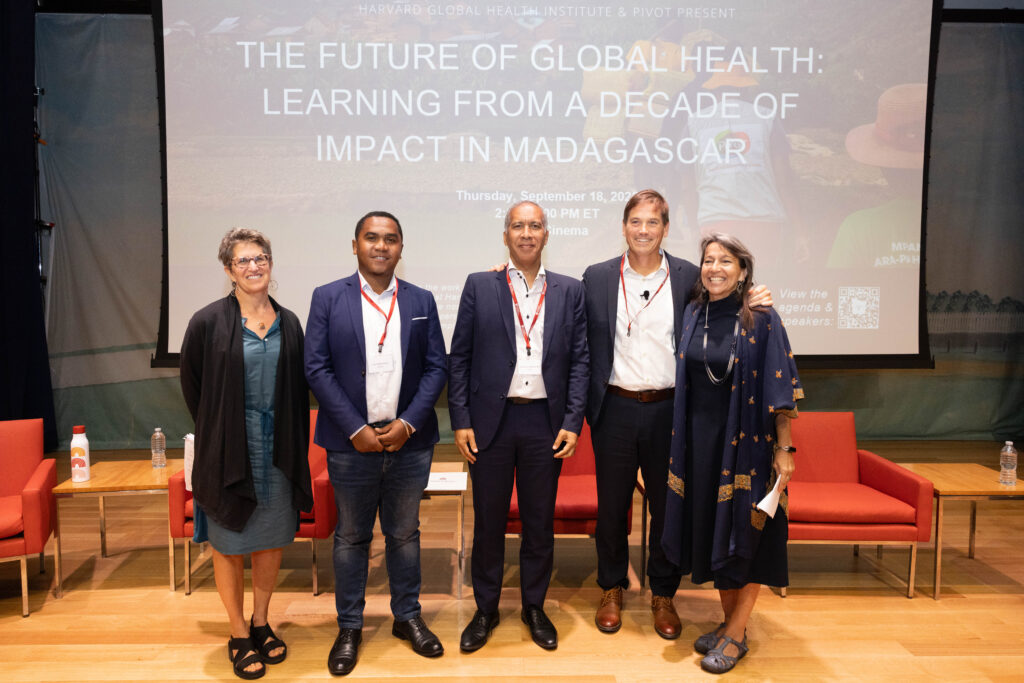
Panelists at the HGHI event on September 18, 2025: (left to right) Carole Mitnick, Luc Rakotonirina, Luc Hervé Samison, Matt Bonds, and Joia Mukherjee. Photo by Evgenia Eliseeva.
Traditionally, health interventions adopted by large institutions follow a vertical model where resources are allocated to address specific diseases, such as HIV and tuberculosis. However, over the last decade, a more horizontal approach of integrated health interventions designed to improve broader population health has proven, through data collection, to be a more effective way to improve health outcomes in under-resourced communities. At an event hosted by the Harvard Global Health Institute last Thursday (September 18th), Associate Professor at Harvard Medical School, Matthew Bonds, explained how his research and fieldwork through Pivot, a nonprofit organization he co-founded, uses this integrated approach to achieve scalable success in Madagascar.
Matt Bonds presenting his research on integrated health interventions in Madagascar. Photo by Evgenia Eliseeva.
“At the beginning of the Millennium Development era in the 2000s-2010s, we started to see more sophisticated models showing that almost all of the common illnesses and causes of mortality were easily preventable if we improved the general health of the population, instead of focusing on treating specific diseases,” said Bonds. “The predictions were that if we implement programs that promote population health, and if we reach the goals around service coverage, we can reduce mortality by 85-90%.”
The Challenging Story of Impact
However, the evidence available at the time diverged from the predictions of these models. While there have been a lot of success stories, showing success has not always been easy. Since most of these health interventions are implemented in some of the most under-resourced communities, the infrastructure to collect reliable patient health information is often unavailable. There is also the problem of finding valid baseline metrics with which to compare the results of the interventions.
When there is a lack of evidence that the horizontal model of integrated programs produces measurable results in mortality rates, not only are we unable to know of the real impact these programs have, or if any impact was made at all, but it also makes it difficult to secure funding to continue the work.
What the Data Doesn’t Tell You
On top of the difficulty of getting good data, there is also the issue of accounting for external factors and the legacy of inequities. Even with appropriate health interventions, sometimes there is not a significant reduction in mortality rate because other upstream factors that would cause premature deaths are in play, such as poverty, disease, and environmental drivers.
Carole Mitnick, Professor in Global Health and Social Medicine at Harvard Medical School and a speaker at the event, agreed that simply counting the cases of disease averted or the mortality rate does not show the full picture of what is happening in the community.
“If you’re doing an intervention on tuberculosis (TB) treatment, the question you’re trying to answer is how many more people were cured by that TB treatment,” Mitnick explained. “But these numbers are only part of the picture. Because if I just look at the cures of tuberculosis, I totally lose sight of the chronic conditions that have been caused by TB and other environmental and occupational risks that may result in premature death, even though we’ve managed to cure more people with TB successfully.”
A Guiding Light for Action
Beyond the research level, data is also fundamental to shaping and implementing the programs. Luc Rakotonirina, a trained nurse and the Deputy Country Director at Pivot in Madagascar, acknowledged that science was an integral part of the research and programming within their organization. The evidence generated through analytics was used to guide how they conduct the project in the field to reach their goals.
“For example, we have evidence from our data that socio-financial barriers were a problem for patients in the district,” said Rakotonirina. “So we prioritized the health coverage program and removed fees for the patients.”
Luc Hervé Samison, a physician who is currently serving as President of the Country Coordinating Mechanism for the Global Fund grant in Madagascar and the Steering Committee Chair at Pivot, said real-time data allowed governments to respond quickly to disease outbreaks.
“Data matters to the Ministry of Health,” Samison explained, citing the fight against malaria as an example. “The President’s Malaria Initiative (PMI) from the United States funded the collection of data in the field for malaria. That permits our government to respond quickly to the outbreaks in hotspot areas in Madagascar.”
Madagascar As a Model
Understanding the critical role of data in health intervention programs, Bonds said he knew they had to make data a core part of what Pivot was planning to do.
“When we set out to implement a health intervention program in Madagascar, we decided to address the challenge of data collection so that we can serve as a model for other programs,” Bonds said. “In addition to receiving patient-level information from the government’s health management information systems, we partnered with the Madagascar Institute of Statistics to conduct household surveys to provide a true baseline. We follow these same households over the years. From these records, we were able to run statistical models to evaluate the specific impact of the programs.”
Ten years since the program launched in Madagascar, there is now data-based evidence to show that under-five, infant, neonatal, and maternal mortality are on a downward trend, system utilization and service coverage are on the rise, and geographic and economic inequalities in access to care are shrinking.
Perhaps the moderator of the event, Joia Mukherjee, Chief Medical Officer at Partners In Health and Director of Master in Medical Science in Global Health Delivery at Harvard Medical School, summed it up best, “The science gives us all optimism that we can do something to help communities in need, and I’m glad to see that Pivot is making global health cool again.”
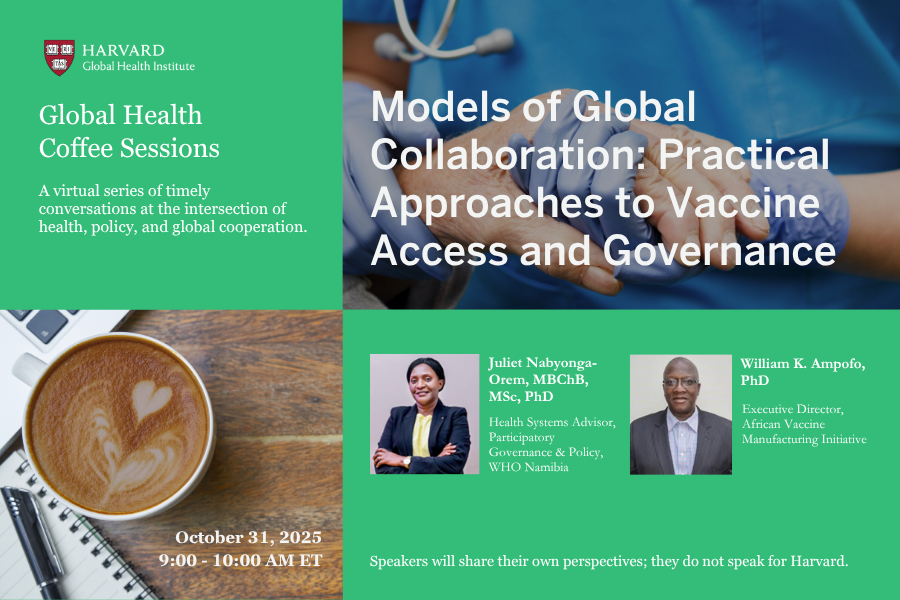
This panel explores how nations are advancing local vaccine manufacturing to accelerate health equity, offering insights into what national ownership looks like for vaccine development and distribution today, especially as traditional donor support declines.
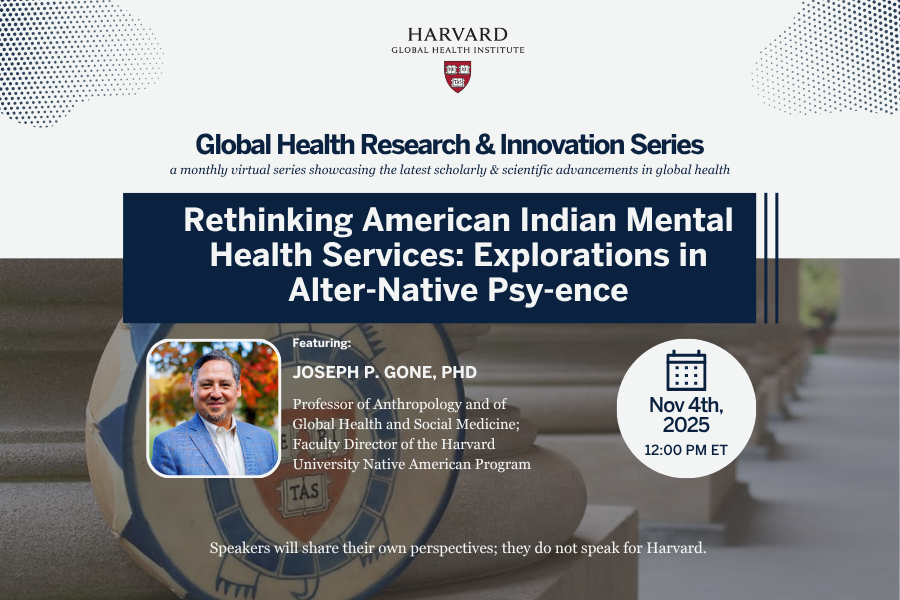
In this talk, Professor Joseph P. Gone explores how Indigenous perspectives can reshape understandings of mental health, challenging Western psychiatric frameworks and reframing “mental health” concerns as postcolonial disorders.
A new letter published in The Lancet, “Global donor funding for COVID-19 was largely disbursed as loans: it’s time to adjust,” co-authored by Jehane Sedky, Abbey Gardner, and Louise Ivers, examines how global COVID-19 aid was delivered—and what the data reveal about the state of international solidarity.