
The Science of Trust: Restoring Confidence in Science and Public Health
Panel Description
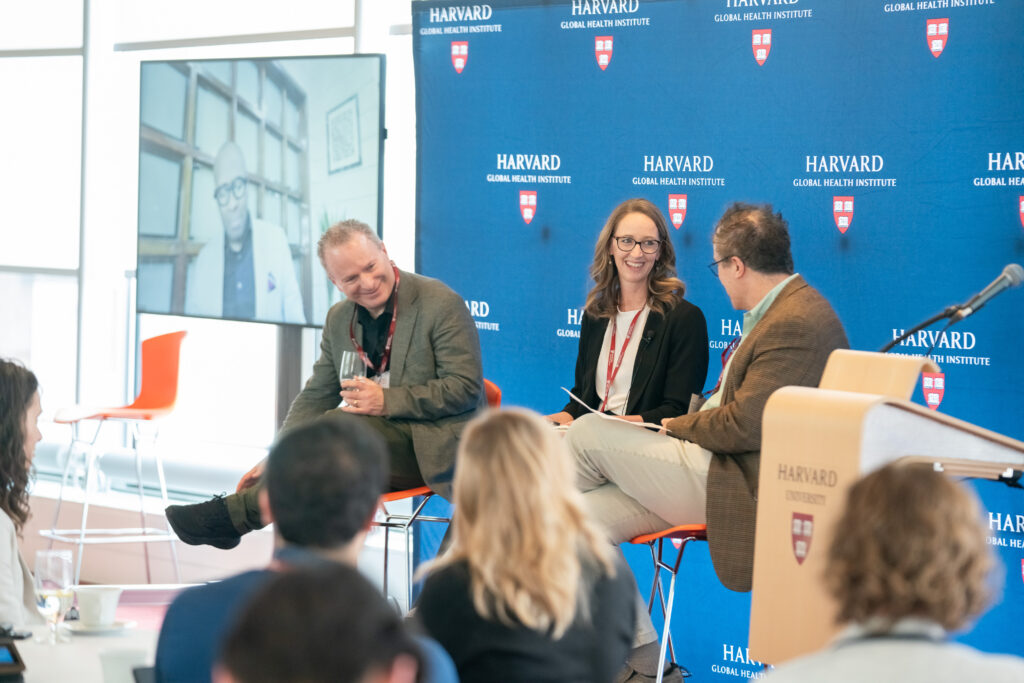
A growing trend of distrust in science is happening worldwide, largely fueled by the spread of misinformation and a lack of understanding about the scientific process. What are the underlying causes of this lack of trust among the public, and how has it affected health outcomes and deepened inequalities for populations globally? How is the mistrust seen in the U.S. mirrored in other parts of the world? This session will delve into the complex issue of trust in the broader scientific and global health community. Our esteemed panelists will discuss the skepticism and suspicions surrounding multilateral organizations and vaccine alliances, including the WHO, GAVI, and the CDC. The expert panel will also identify potential roots of this growing mistrust and address the dangers posed by misinformation and the lack of effective fact-checking mechanisms. Together, we will discuss the significant role of non-traditional media and how these platforms influence narratives and shape public perceptions of health issues. Join us as we tackle these critical questions and explore strategies to rebuild public trust and restore confidence in health institutions.
Key Takeaways
“This threat of misinformation through AI is something that’s going to make our work even more difficult. And that’s going to complicate the trust in public health institutions even further. And therefore, there is a need for urgent, innovative resolution of AI use in saving people’s lives and livelihoods as well.” – Githinji Gitahi
Speaker Details

Githinji Gitahi, MBS
Group Chief Executive Officer, Amref Health Africa
Dr. Githinji Gitahi, MBS, joined Amref Health Africa in 2015 and has held various roles spanning the health, media, and private sectors. Prior to his tenure at Amref, he served as Vice President and Regional Director for Africa at Smile Train International. Dr. Gitahi is esteemed for his leadership on both global and regional stages, with notable achievements, including co-chairing the global UHC2030 movement and serving on the Commission on Africa’s COVID-19 Response. His past roles include serving on the Governing Board of Africa CDC, the Board of the National Cancer Institute, and as Co-Chair of the Strategic Advocacy Committee for PMNCH. Currently, he serves on the Boards of Coalition for Epidemic Preparedness Innovations (CEPI), Safaricom Foundation, and Food for Education, as well as on the Independent Board of the Lancet Countdown. Recently, he was appointed to the AstraZeneca Global Health Equity Advisory Board and the PMNCH Board, and became a member of the Virchow Foundation Prize Committee and the Advisory Council of the Coalition for Women’s Health in Africa (COWHA). Dr. Gitahi is a prominent advocate for pro-poor Universal Health Coverage and spearheads the largest thought leadership convening on the African health agenda.

David Lazer, PhD
University Distinguished Professor of Political Science and Computer Sciences, Northeastern University; Co-Director, NULab for Digital Humanities and Computational Social Science
David Lazer is University Distinguished Professor of Political Science and Computer Sciences, Northeastern University. Prior to joining Northeastern University, he was on the faculty at Harvard Kennedy School (1998-2009). In 2019, he was elected a fellow to the National Academy of Public Administration. He has published prominent work on misinformation, democratic deliberation, collective intelligence, computational social science, and algorithmic auditing, across a wide range of prominent journals such as Science, Nature, Proceedings of the National Academy of Science, the American Political Science Review, Organization Science, and the Administrative Science Quarterly. His research has received extensive coverage in the media, including the New York Times, NPR, the Washington Post, the Wall Street Journal, and CBS Evening News. He is a co-leader of the COVID States Project, one of the leading efforts to understand the social and political dimensions of the pandemic in the United States. Dr. Lazer has served in multiple leadership and editorial positions, including as a board member for the International Society for Computational Social Science (ISCSS), the International Network of Social Network Analysts (INSNA), reviewing editor for Science, associate editor of Social Networks and Network Science, numerous other editorial boards and program committees. Dr. Lazer received a PhD in Political Science from the University of Michigan and a BA in Economics from Wesleyan University.

Emily Smith, PhD, MSPH
Assistant Professor, Department of Emergency Medicine/Surgery, Duke University; Assistant Professor of Global Health, Duke Global Health Institute
Dr. Emily Smith is an Assistant Professor in the Department of Emergency Medicine/Surgery at Duke University and an Assistant Professor of Global Health at the Duke Global Health Institute. Her research interests focus on the intersection of children’s health and poverty. Currently, her research takes place in Tanzania, Burundi, Somaliland, and Latin America. Dr. Smith received her PhD in epidemiology from the Gillings School of Public Health at UNC-CH and an MSPH from the University of South Carolina. During the COVID-19 pandemic, she started a popular Facebook page and Substack newsletter called Friendly Neighbor Epidemiologist through the lens of love-your-neighbor, reaching 10 million people in 80 countries. Her work has been featured in NPR, the Washington Post, and TIME Magazine. Dr. Smith’s book, The Science of the Good Samaritan: Thinking Bigger about Loving our Neighbors, was released in 2023 (Zondervan, Harper Collins). Dr. Smith has been married to her pastor-husband for 21 years and they have two fantastic children, one spoiled golden retriever and a new very-friendly golden doodle puppy.

Matthew A. Baum, PhD
Marvin Kalb Professor of Global Communications and Professor of Public Policy, Harvard University John F. Kennedy School of Government
Matthew A. Baum is the Marvin Kalb Professor of Global Communications and Professor of Public Policy at the Harvard Kennedy School. His research interests include the domestic politics of foreign policy, the influence of the media and public opinion in American politics, fake news and misinformation, and the relationship between partisan media and polarization. His research has appeared in over a dozen leading scholarly journals, such as the American Political Science Review, American Journal of Political Science, and the Journal of Politics. His books include Soft News Goes to War: Public Opinion and American Foreign Policy in the New Media Age (2003, Princeton), War Stories: The Causes and Consequences of Public Views of War (2009, Princeton), and War and Democratic Constraint: How the Public Influences Foreign Policy (2015, Princeton). He is co-founder of the HKS Misinformation Review and co-founder of the Civic Health and Institutions Project (CHIP50).