At the Heart of Climate Change, War, and Health: A Case for a Changing Public Perspective
For years, scientists have been warning us about the looming crisis of climate change. However, according to a recent study, nearly 15% of Americans do not believe climate change is real, and 37% are not worried about it. In another study, less than half of Americans (45%) believe climate change will pose a serious threat in their lifetime. Even though the majority of people worldwide express worry about climate change, most don’t feel that they have the power to make a significant difference. How do you make collective change if a major subset of a population does not agree that a problem exists, or feels helpless about the problem? One neuroscientist thinks the answer may lie in our brain: change how people perceive climate change.
Why Our Brain Struggles with Climate Change
Ann-Christine Duhaime, Nicholas T. Zervas Distinguished Professor of Neurosurgery at Harvard Medical School and the faculty lead of Harvard Global Health Institute’s Climate Change, War, and Health Scholarly Working Group, believes that climate change is too big and too complicated a problem for humans to wrap their heads around easily.
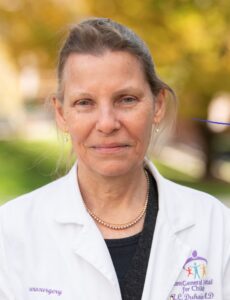
Ann-Christine Duhaime is a Professor of Neurosurgery at Harvard Medical School and the faculty lead of Harvard Global Health Institute’s Climate Change, War, and Health Scholarly Working Group.
“It is difficult for us to perceive it because we never had to deal with something like this before,” said Duhaime. “We are the first generations to have to face this rapid, human-caused climate change problem. There is no historical reference point for us to understand it and evolution didn’t need for us to recognize and act on this kind of crisis that didn’t exist when we were being designed mostly for short-term survival benefit.”
She explained that our brain is designed to make calculations using millions of minuscule molecular changes weighted primarily to enhance short-term survival success. However, it does not perform as well when dealing with long-term problems such as climate change, making it hard to imagine the connection between our choices today and the future 50 or 100 years from now.
“And the way we often frame the climate issue is not helping either, when we stress doom and gloom without giving something to work towards,” Duhaime added. “The brain relies on the reward system to make decisions and to change behavior. While fear can be a motivator, research shows that there is a better chance of behavioral change if there is a positive reward attached to it.”
Our Adaptive Brain
Duhaime said that the brain is inherently designed to be exquisitely flexible. Humans are highly adaptable to changes in their environment. This adaptability, or plasticity in neural terms, is what allows us to discover new strategies to meet new challenges – one of which is that the brain can change what it finds rewarding as circumstances change.
“What if we offer an attainable, alternative positive vision – a compelling reward – that connects to the specific actions people take today?” asked Duhaime. “Given new information presented in a relatable way, the brain can make different decisions and take different actions. If we take climate action and also prioritize diplomatic solutions now to reduce these synergistic crises, we are shifting how we use our human and economic resources in a way that can bend the curve towards a more livable future for generations to come. But this requires a paradigm shift, which is challenging, to say the least.”
War, Climate, and Health
One of the goals of Duhaime’s Scholarly Working Group is to change the public perception on climate change and to nudge people – including those in leadership positions – to make decisions that take more long-range perspectives into account. The cross-disciplinary group of researchers includes war experts, anthropologists, epidemiologists, trauma surgeons, and public health experts, many of whom have lived or worked in war zones.
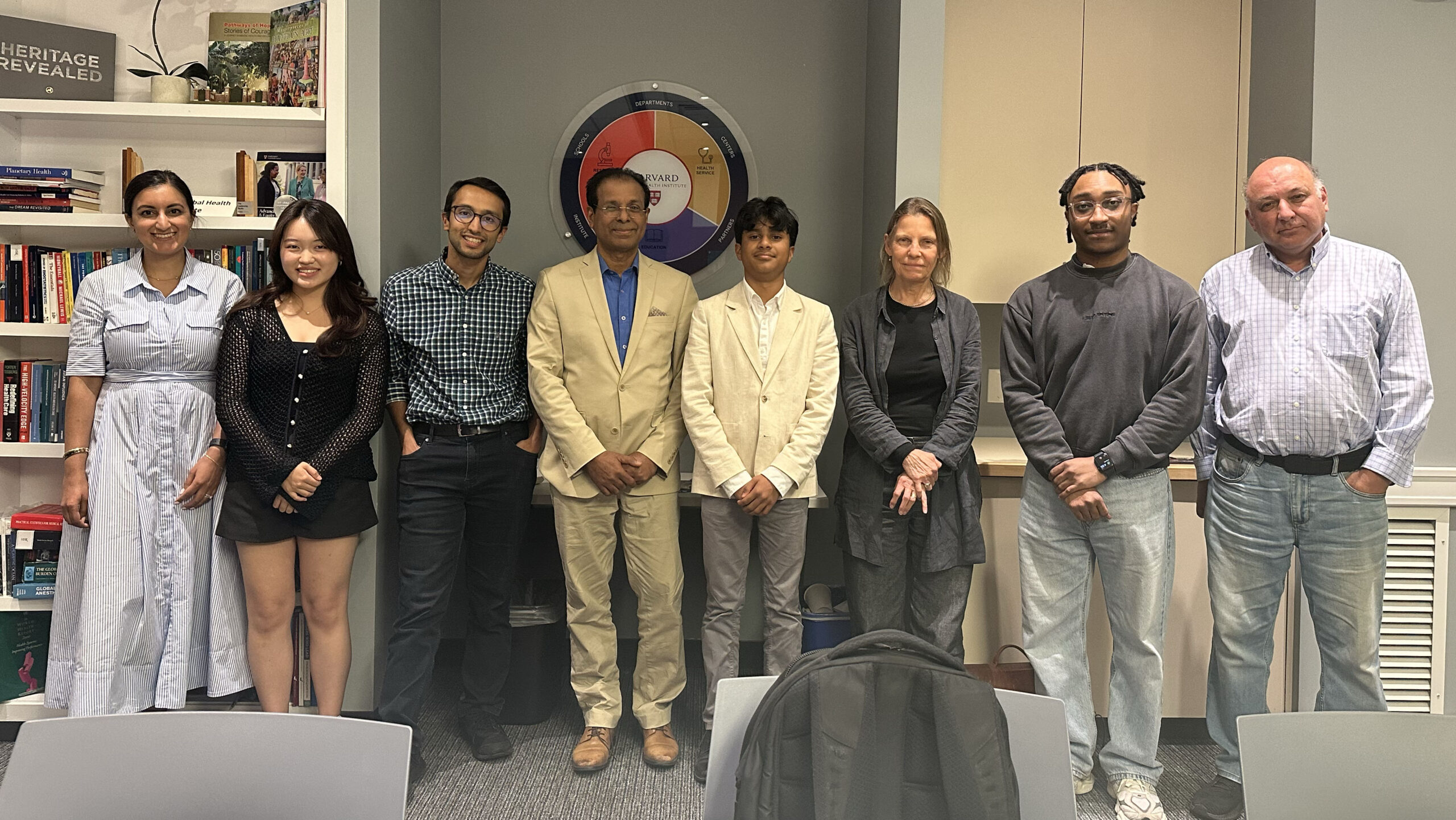
Members of the Scholarly Working Group include war experts, anthropologists, epidemiologists, trauma surgeons, and public health experts, many of whom have lived or worked in war zones.
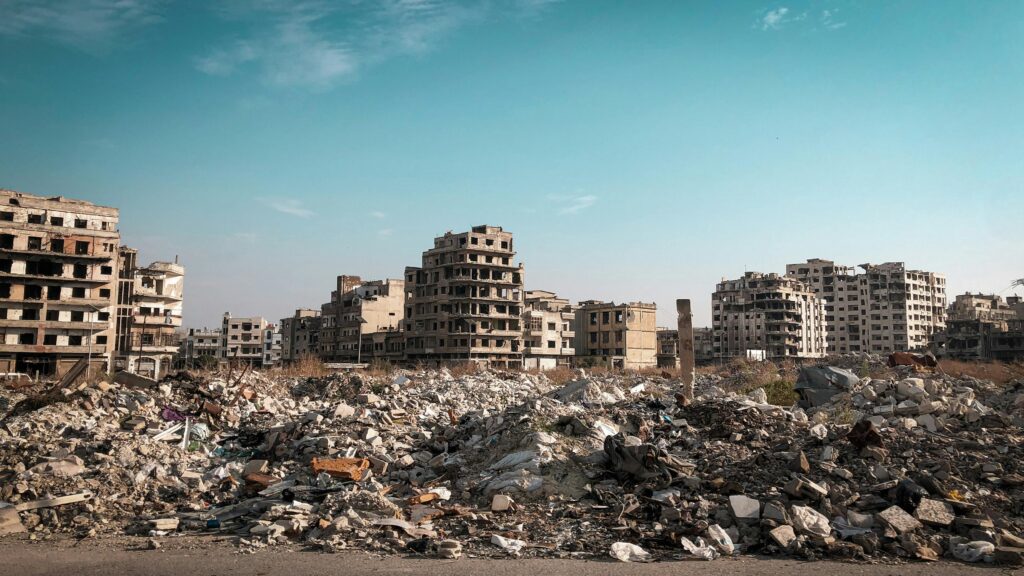
“We decided to focus on the intersection of climate, war, and health, because we know climate change adversely affects health, war exacerbates these effects, and sometimes both together create entirely new health risks,” said Duhaime. “War in the era of accelerating climate change depletes the ability of an entire region to adapt for decades, when we need to take action now to avert the worst-case scenarios experts have projected. And most people can perceive and empathize with the effects of climate-related disasters and wars, most of which also involve heart-wrenching and frustratingly preventable harm to children.”
On August 8th, the group met to discuss their progress on a series of scoping reviews of existing literature to understand what’s already known about the intersections of war, climate change, and health. One of their working hypotheses is that wars set back the ability for governments and societies to adapt to climate change and that the confluence of the two worsens already serious health problems in conflict zones over generations. The group is also developing a series of case studies that aim to fine-tune the science and to elevate the voices of healthcare professionals and patients in conflict zones also affected by various aspects of climate change – stories that demonstrate the lived experiences of these concurrent crises.
Changing Minds Through Storytelling
The group hopes the project could offer both a new scientific understanding and a compelling narrative for climate action rooted in their research findings and the science of human decision-making. They decided that one of the most effective means of storytelling to change minds and garner action is cinematic art.
“I hope we can produce a film that would offer people an alternate vision of the future based on today’s decisions, different from what they see in the media, what they did not know before,” said Duhaime. “When we receive new information about cause, effect, and outcomes, including both facts and emotional relatedness, we can weigh these differently, allowing us the ability to change.”
The group’s inspiration is modeled after the 1983 film “The Day After”, a fictional film based heavily on science that depicts the aftermath of a nuclear strike to the U.S. President Ronald Reagan wrote in his diary that the film was “very effective and left me greatly depressed”. He eventually met with then Soviet Premier Mikhail Gorbachev and signed a treaty that resulted in the banning and reducing of their nuclear arsenal.
“We, as a species, can choose our future. Decisions made now will influence how life will look in 50 or 100 years,” said Duhaime. “Our hope is that by showing the public and policy-makers both the ongoing worsening effects as well as an alternative, achievable, more positive vision, we can help move the needle towards decisions that increase the chances of a better future that we co-create by taking appropriate climate action now.”
HGHI Scholarly Working Groups
The Harvard Global Health Institute’s Scholarly Working Groups are designed to encourage a collaborative environment, promote inter-faculty gatherings, and explore and accelerate research areas in topics critical to advancing “Health for All”. Each Scholarly Working Group includes faculty from at least two schools across Harvard University. Through these working groups, we aim to catalyze ideas, inspire the writing of grants, policy briefs, or working papers, or build networks to advance a program of work.
At a recent Harvard LEAD Fellowship alumni workshop, 12 fellows from 10 countries explored with Satchit Balsari how global health leaders can address the growing public health challenge of heat.
In this talk, Professor Ann Forsyth explores how the built environment can support older adults who wish to remain in their homes and communities as they age.
This panel explores how nations are advancing local vaccine manufacturing to accelerate health equity, offering insights into what national ownership looks like for vaccine development and distribution today, especially as traditional donor support declines.