Championing Health Tech Innovation Across Borders: From personal setbacks to global entrepreneurship
Laura Wegner ’25 presenting how Mii can help patients take ownership of their medical data.
Before coming to Harvard, Laura Sophie Wegner ’25, an undergrad with a concentration in Economics and a secondary in Computer Science, was a competitive swimmer in high school in her hometown of Walsrode, Germany—until she dislocated her kneecap for the second time. Because her health data was scattered, the doctors did not have her full medical history and ended up using the wrong surgical method that put her swimming career to a grinding halt. That could have been the end of the story. But for Laura, it’s just the beginning of a blossoming global entrepreneurship journey in health innovation.
Upon her arrival at Harvard to start her college life, Laura quickly became immersed in the entrepreneurial scene on campus through the Lemann Program for Creativity and Entrepreneurship (LPCE 102), a course that catalyzed her passion for solving real-world problems. She now serves as a fellow of the course and continues to push the boundaries of innovation.
During her freshman year, Laura co-founded the health tech startup Mii, a digital health platform that empowers patients to take ownership of their medical data. Mii acts as a “passport for your health,” streamlining access to complete medical histories across healthcare providers while ensuring maximum data privacy. Her commitment to transforming fragmented patient care systems into seamless, secure networks is deeply personal but will also have broad implications for patients everywhere.
“I wanted to build something that would ensure no one else had to go through what I did,” Laura shared.
This fall, Laura was named a Rhodes Scholar, making her the first German recipient from Harvard in a decade. As one of just two scholars selected from Germany this year, the prestigious award recognizes her exceptional academic record, leadership, and dedication to improving healthcare systems through technology.
At Oxford, Laura plans to deepen her technical skills in machine learning and ethical AI, focusing on how to build fair, effective digital health solutions on a global scale.
In a world where healthcare equity and data security are more critical than ever, Laura Wegner stands out as a bold innovator and empathetic leader, determined to bridge the gap between technology and humanity.
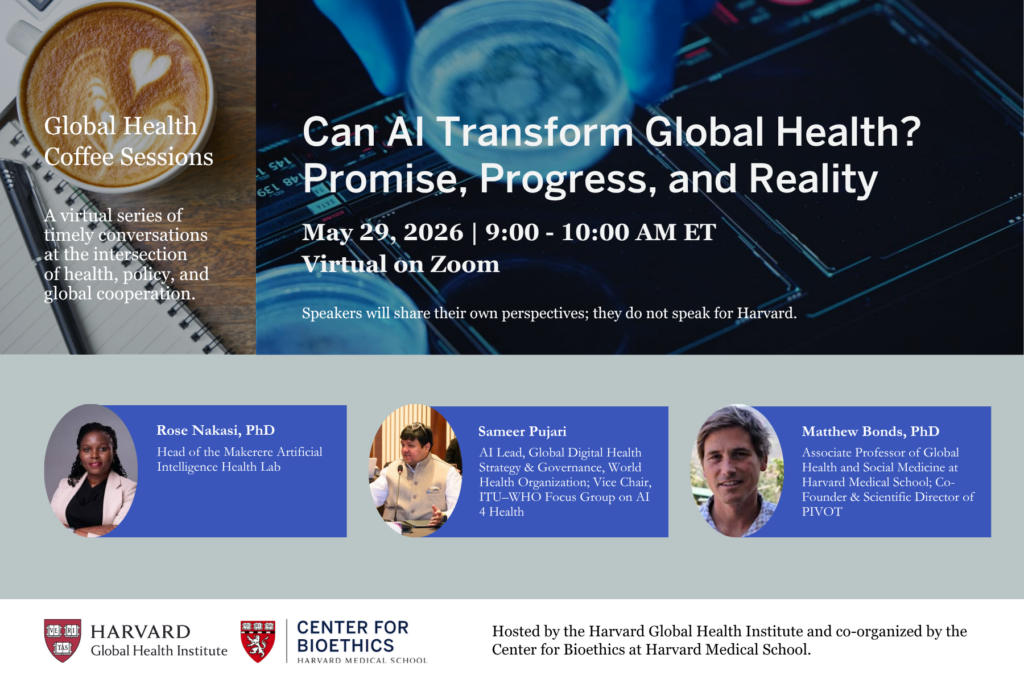
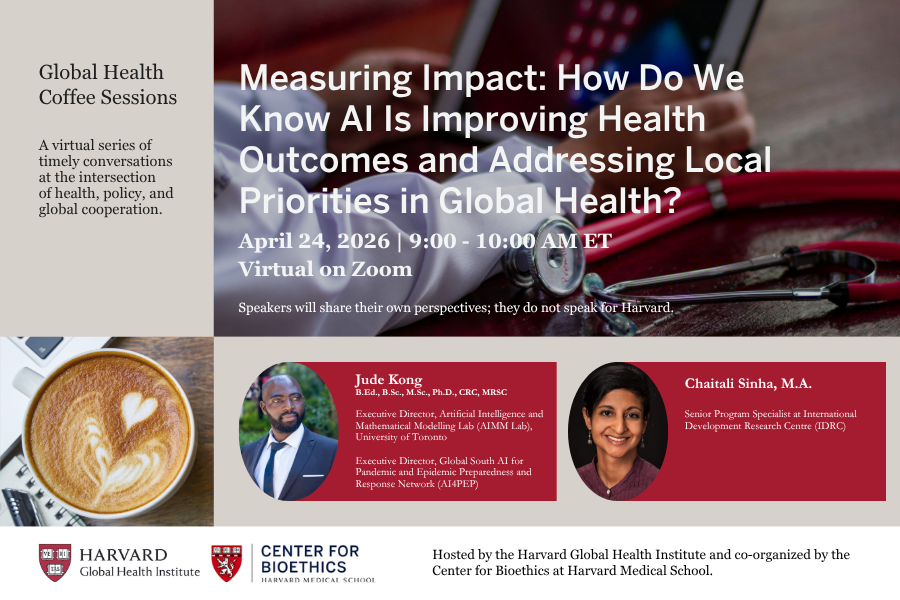
Across a four-part virtual discussion series this spring, experts from academia, multilateral organizations, government, philanthropy, and civil society examined the opportunities, challenges, and key questions shaping AI’s role in global health.
This discussion examines AI’s potential to strengthen global health systems while exploring the evidence, infrastructure, and capacity needed to translate innovation into impact.
Explore key insights on how governments and funders can foster equitable, locally driven partnerships to responsibly scale AI innovation in global health.