RECORDING: Deploying AI in Global Health: Partnerships, Power, and Public Value
Explore key insights on how governments and funders can foster equitable, locally driven partnerships to responsibly scale AI innovation in global health.
Chinasa T. Okolo, Ph.D, Founder and Scientific Director, Technecultura
Esther Kunda, Director General, Innovation & Emerging Technologies, Ministry of Information Communication Technology (ICT) and Innovation of Rwanda
Moderator: Louise Ivers, MD, MPH, DTM&H, Director, Harvard Global Health Institute
About the AI in Global Health Coffee Sessions in the Series
This session is part of the Harvard Global Health Institute’s ongoing AI in Global Health Coffee Sessions in the series. These sessions explore the evolving role of artificial intelligence in global health from multiple perspectives, including evaluation, implementation, governance, equity, and policy. While each session focuses on a distinct topic, the conversations are designed to build on one another and reflect the interdisciplinary questions shaping the field. Together, they highlight both the opportunities and the broader considerations involved in applying AI in global health contexts.
To learn more about other sessions in our AI in Global Health series, visit our recording & resources pages.
Key Discussion Points
3:38 – Rapid rise of AI partnerships in government and industry 6:12 – Rwanda’s leadership in AI and approach to partnerships 10:47 – AI regulation, risks, and equity-focused perspectives 14:02 – Special considerations for AI in healthcare 15:30 – Rwanda’s National AI Policy and six priority areas 20:36 – Transparency in AI and challenges for public understanding 24:10 – Using AI in Rwanda’s health system and daily practice 30:18 – “Technosolutionism,” bias in LLMs, and misinformation risks 33:22 – Audience Q&A
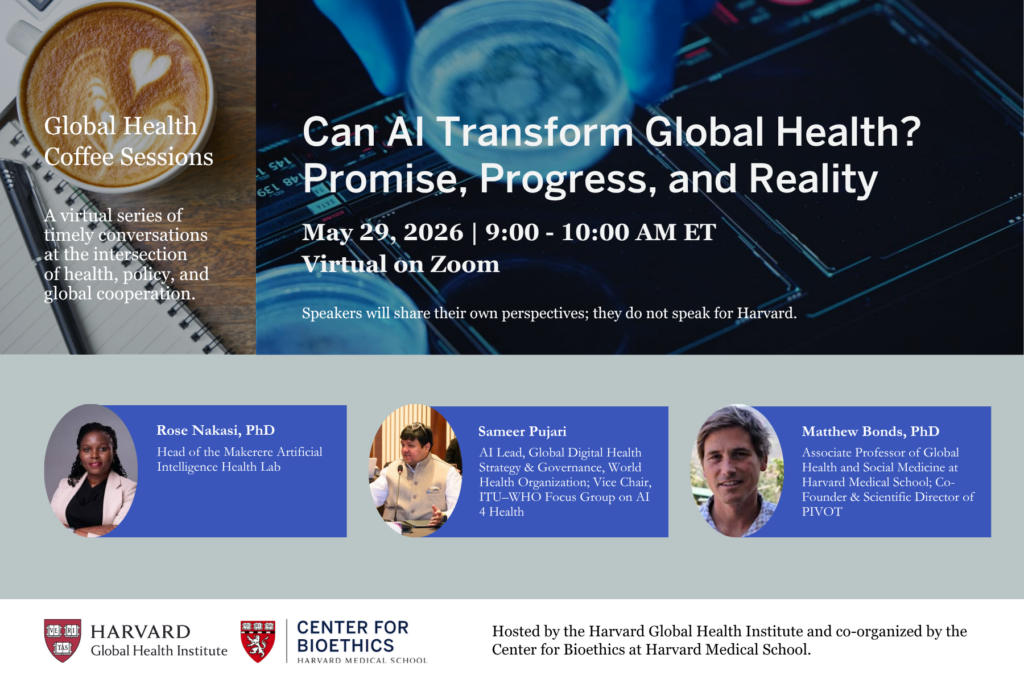
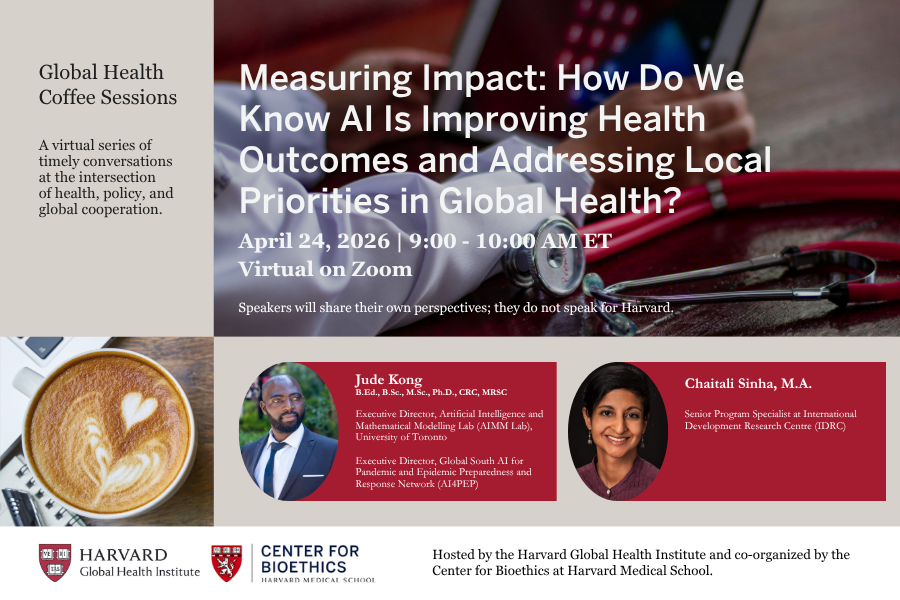
Across a four-part virtual discussion series this spring, experts from academia, multilateral organizations, government, philanthropy, and civil society examined the opportunities, challenges, and key questions shaping AI’s role in global health.
This discussion examines AI’s potential to strengthen global health systems while exploring the evidence, infrastructure, and capacity needed to translate innovation into impact.
Explore key insights on how governments and funders can foster equitable, locally driven partnerships to responsibly scale AI innovation in global health.