RECORDING: Frameworks for Advancing and Governing Ethical AI in Global Health
Our speakers explore how artificial intelligence can be governed to support global health equitably. This discussion highlights ethical frameworks, practical strategies, and inclusive approaches to ensure AI benefits all communities, especially in low- and middle-income countries.
Gabriela Ramos, MPA, Former Assistant Director-General for Social and Human Sciences at UNESCO
Alessandro Blasimme, PhD, Senior Scientist, Department of Health Sciences and Technology, Swiss Federal Institute of Technology in Zurich (ETH Zurich)
Moderator: Rebecca Weintraub Brendel, MD, JD, Director, Center for Bioethics at Harvard Medical School
About the AI in Global Health Coffee Sessions in the Series
This session is part of the HGHI’s ongoing AI in Global Health Coffee Sessions in the series. These sessions explore the evolving role of artificial intelligence in global health from multiple perspectives, including evaluation, implementation, governance, equity, and policy. While each session focuses on a distinct topic, the conversations are designed to build on one another and reflect the interdisciplinary questions shaping the field. Together, they highlight both the opportunities and the broader considerations involved in applying AI in global health contexts.
To learn more about other sessions in our AI in Global Health series, visit our recording & resources pages.
Key Discussion Points
4:55 – Most promising opportunities for AI to advance global health equity
07:36 – Ethical concerns and risks in AI for global health; motivations for working in this space
11:57 – Gabrielle explains UNESCO Recommendation on Ethics of AI: purpose, goals, and intended impact
20:45 – Alessandro discusses approach to systemic ethical oversight and models like FIRM
30:25 – Assessment of global access to AI and its implications for health; lessons learned
38:23 – Supporting countries with limited technical capacity but strong AI governance frameworks
45:02 – Democratization and market-shaping of AI in health; sustaining values-driven implementation
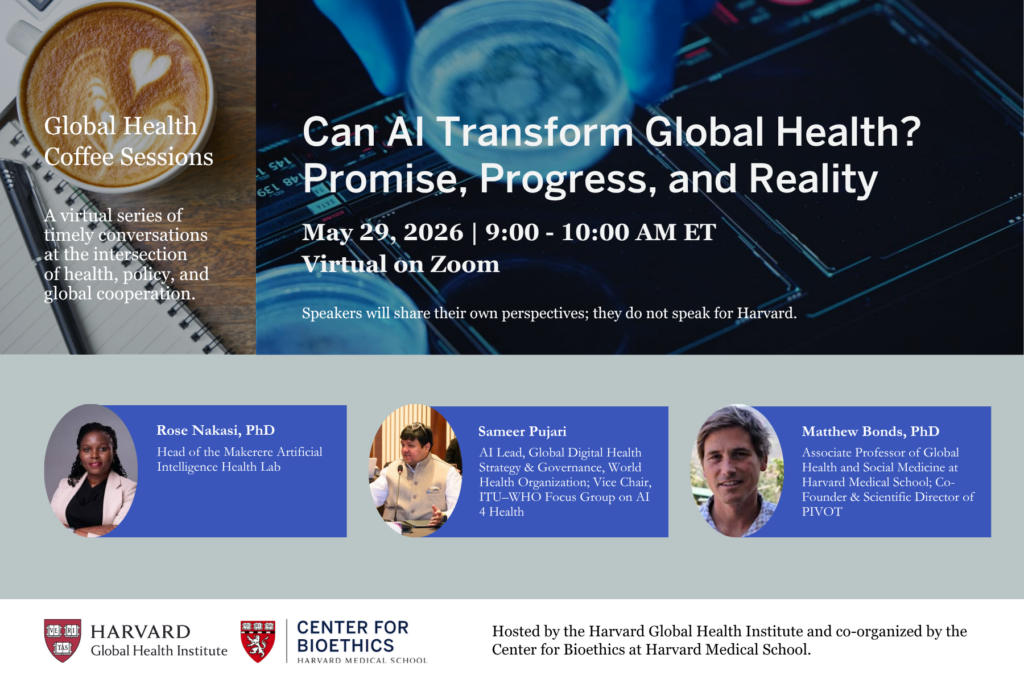
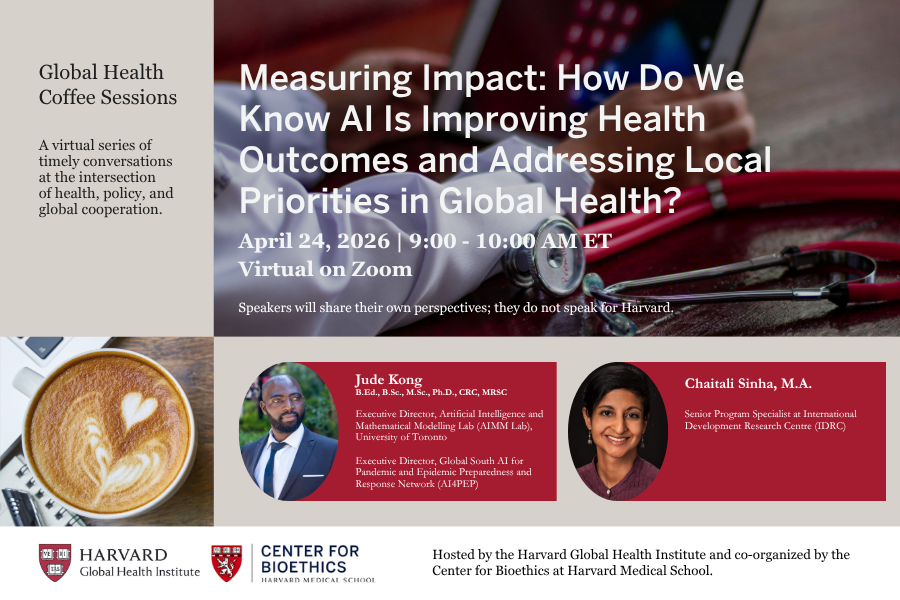
Across a four-part virtual discussion series this spring, experts from academia, multilateral organizations, government, philanthropy, and civil society examined the opportunities, challenges, and key questions shaping AI’s role in global health.
This discussion examines AI’s potential to strengthen global health systems while exploring the evidence, infrastructure, and capacity needed to translate innovation into impact.
Explore key insights on how governments and funders can foster equitable, locally driven partnerships to responsibly scale AI innovation in global health.