Jude Kong, B.Ed., B.Sc., M.Sc., Ph.D., CRC, MRSC, Executive Director, Artificial Intelligence and Mathematical Modelling Lab (AIMM Lab), University of Toronto; Executive Director, Global South AI for Pandemic and Epidemic Preparedness and Response Network (AI4PEP)
Chaitali Sinha, M.A., Senior Program Specialist at International Development Research Centre (IDRC)
Moderator: Louise Ivers, MD, MPH, DTM&H, Director, Harvard Global Health Institute
About the AI in Global Health Coffee Sessions in the Series
This session is part of the Harvard Global Health Institute’s ongoing AI in Global Health Coffee Sessions in the series. These sessions explore the evolving role of artificial intelligence in global health from multiple perspectives, including evaluation, implementation, governance, equity, and policy. While each session focuses on a distinct topic, the conversations are designed to build on one another and reflect the interdisciplinary questions shaping the field. Together, they highlight both the opportunities and the broader considerations involved in applying AI in global health contexts.
To learn more about other sessions in our AI in Global Health series, visit our recording & resources pages.
Key Discussion Points
00:03:31 – Reframing AI Evaluation in Global Health: Myths, Assumptions, and Missed Priorities 00:08:22 – Building Ethical and Locally Relevant AI Evaluation Frameworks 00:15:14 – IDRC’s Long-Term Strategy for AI Research Capacity in the Global South 00:21:46 – From Community Priorities to Deployment: Practical Evaluation in AI for Pandemic Preparedness 00:27:57 – Understanding the Four-Level Framework for Evaluating AI in Health Systems 00:32:44 – Responsible AI vs. the Race for Speed: Addressing the Structural Accountability Gap 00:37:32 – Community-Led AI Governance and Evaluation in the Global South 00:42:00 – How Global Funders Are Evolving Their Approach to AI Evaluation and Collaboration 00:44:36 – How Researchers, Students, and Institutions Can Join Global AI Health Networks 00:49:24 – Transition to Discussion on Data Quality and AI Evaluation
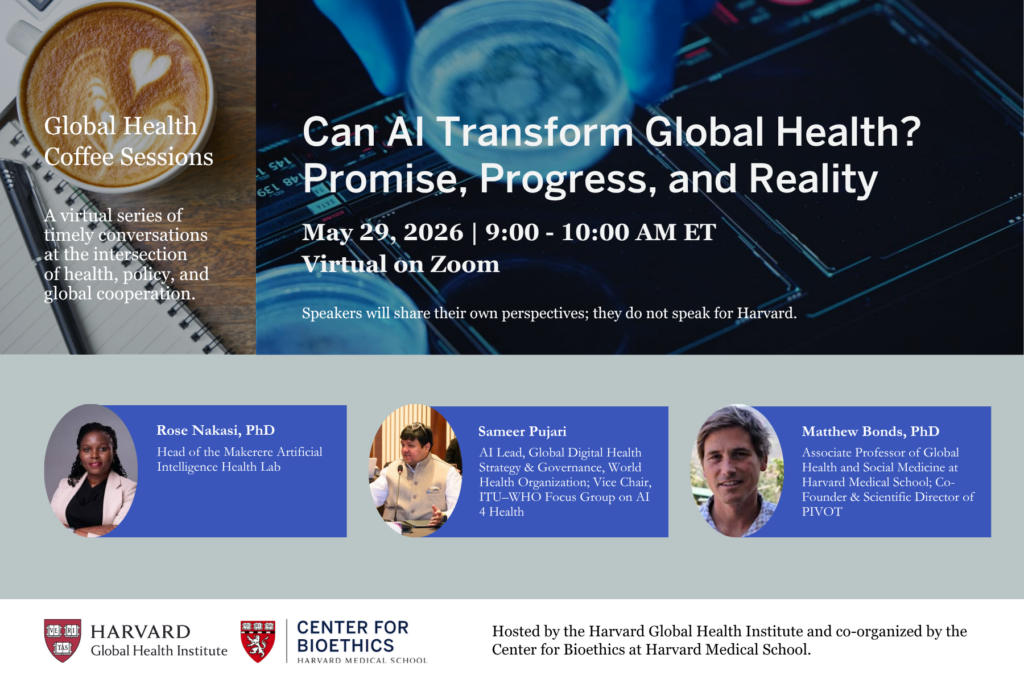
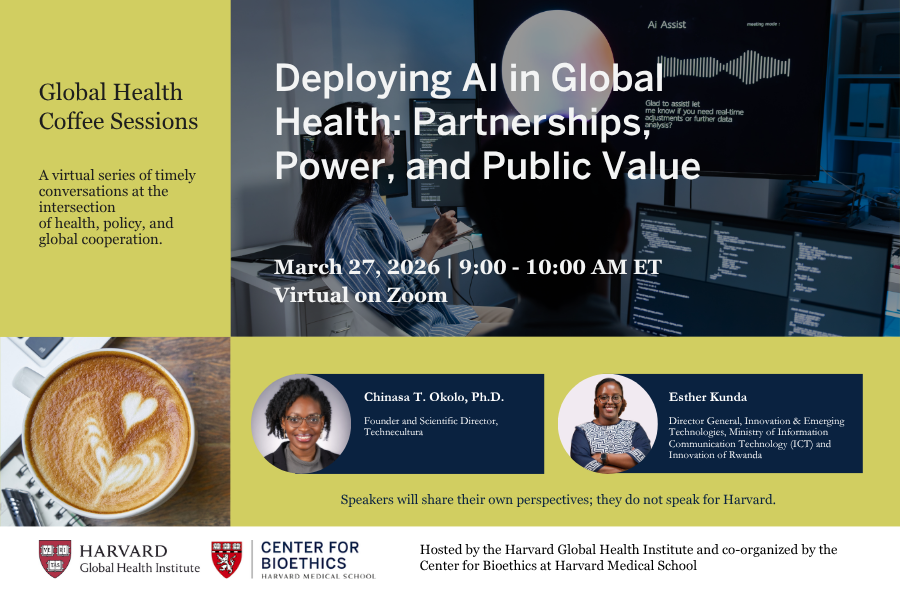
Across a four-part virtual discussion series this spring, experts from academia, multilateral organizations, government, philanthropy, and civil society examined the opportunities, challenges, and key questions shaping AI’s role in global health.
This discussion examines AI’s potential to strengthen global health systems while exploring the evidence, infrastructure, and capacity needed to translate innovation into impact.
Explore key insights on how governments and funders can foster equitable, locally driven partnerships to responsibly scale AI innovation in global health.