April 16th, 2026
Global Health Forward: Strength Through Innovation and Collective Action

Priority Setting, Solidarity, and Global Justice When Resources Are Scarce

Panel Description

Hosted in partnership with the Harvard T.H. Chan School of Public Health.

This session examines how health priorities should be set when resources are scarce, at a moment of profound strain on global health financing. Against the backdrop of significant cuts in international aid and growing uncertainty in development assistance, hard choices about what to fund, whom to protect, and how to act in solidarity have become unavoidable. The discussion is framed by the Lusaka Agenda, a shared vision developed by major global health actors to better coordinate efforts, strengthen local agenda setting, reduce fragmentation, and ensure that limited resources are used more effectively and equitably. Panelists reflect on principles of solidarity and global justice, and consider how transparent, evidence-informed decision-making can help governments and global institutions navigate scarcity without abandoning commitments to fairness, inclusion, and the needs of the most vulnerable. 

Key Takeaways

  • Health systems in Africa reflect a shift in focus from financing levels alone to how priorities are set under scarcity. Sustainability is framed less as reaching full domestic financing and more as a governance challenge: making explicit choices about what gets funded, integrating fragmented vertical programs, and aligning external financing with national priorities. The central question is how decisions are made when resources are limited, not simply who provides them.
  • Fiscal constraints are structural and extend beyond the health sector into global economic dynamics. Many countries face constrained fiscal space due to debt servicing, illicit financial flows, and tax limitations, while out-of-pocket spending, especially on medicines, continues to grow and remains highly inequitable. This creates persistent pressure on households and limits the ability of states to provide reliable, universal services.
  • Health sovereignty is increasingly prominent politically but remains uneven in practice. While regional commitments signal stronger national ownership of health systems, many countries still fall short of spending targets and remain heavily dependent on imported medicines and technologies. The key gap is between political commitment and the fiscal and institutional capacity needed to implement it.
  • Solidarity is being redefined away from traditional aid toward shared risk management and system efficiency. The discussion emphasized distinguishing between support to countries, financing global public goods, and other external flows, with a stronger focus on alignment with national priorities. Solidarity is increasingly understood as ensuring fair risk pooling and improving the efficiency and equity of resource allocation.
  • Progress depends on strengthening governance, coordination, and evidence-based decision-making under constraint. Multilateral and development partners are shifting toward technical cooperation and system integration rather than fragmented support. Long-term sustainability will require better data, stronger institutions, and priority-setting mechanisms that explicitly protect populations most at risk of being left behind.

“Health is a political struggle. Politicians need to be accountable, discussions need to happen in countries, taxation needs to be mobilized, illicit financial flows need to be reduced—and politics is local.”

– John-Arne Rottingen

Resources

Speaker Details

Kalipso Chalkidou, MD, PhD

Director of the Performance, Financing and Delivery (PFD) Department, World Health Organization

Dr Kalipso Chalkidou is the Director of Health Financing and Economics at the World Health Organization (WHO) in Geneva and a Visiting Professor of Global Health at the School of Public Health, Imperial College London. Before she joined WHO she set up and run the Department of Health Finance at the Global Fund to Fight AIDS, TB and Malaria and prior to that she was Director of Global Health Policy and a Senior Fellow at the Center for Global Development and a Founding member of the international decision support initiative (iDSI). Her work has concentrated on helping governments build technical and institutional capacity for using evidence to set investment priorities en route to UHC.

John Arne

John-Arne Rottingen, MD, PhD, MSc, MPA

Chief Executive Officer, Wellcome Trust

John-Arne Røttingen is Chief Executive Officer of Wellcome, UK. He has served aAmbassador for Global Health at the Ministry of Foreign Affairs, Norway, been Adjunct Scientific Director at the Norwegian Institute of Public Health and Visiting Fellow of Practice at Blavatnik School of Government, Oxford University. He was the founding Chief Executive Officer of CEPI – Coalition for Epidemic Preparedness Innovations and has been the Chief Executive of the Research Council of Norway; Executive Director of Infection Control and Environmental Health at the Norwegian Institute of Public Health; Professor of Health Policy at the Department of Health Management and Health Economics, Institute of Health and Society, University of Oslo; and Adjunct Professor at the Department of Global Health and Population, Harvard T.H. Chan School of Public Health. He has been the founding Chief Executive of the NorwegiaKnowledge Centre for the Health Services; Oxford Scholaat Wadham College; Fulbright Fellow at Harvard Kennedy School; Chair of the Board of the Alliance for Health Policy and Systems Research; board member of Gavi, PATH, Medicines Patent Pool and GARDP; Chair of the Consultative Expert Working Group on Research and Development: Financing and Coordination (CEWG), WHO, co-chair of the steering group of the Future of the Global Health Initiatives, chair of the ACT-Accelerator Facilitation Council’s Financing and Resource Mobilization Working Group, and member of the G20 High Level Independent Panel on Financing the Global Commons for Pandemic Preparedness and Response.

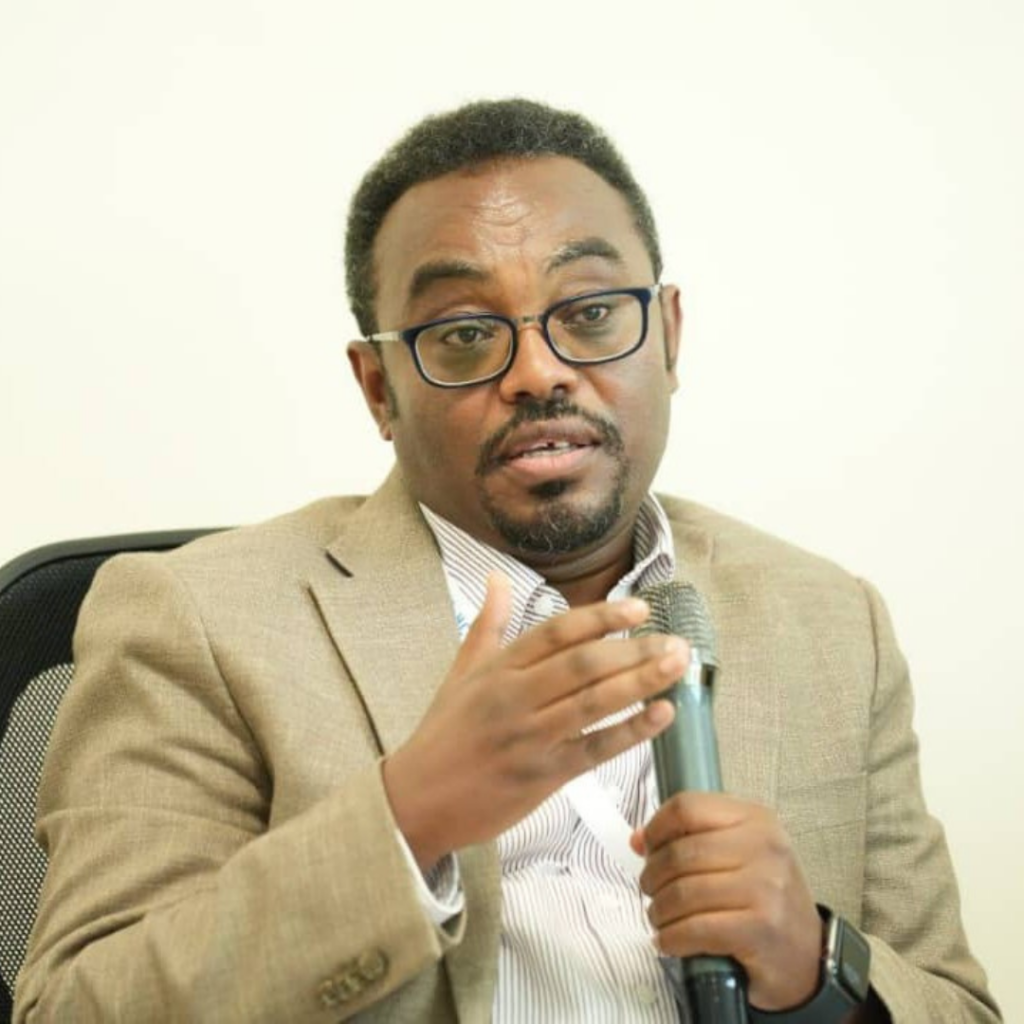
Addis T.

Addis Tamire, MD, MPH

Senior Director of Health System Strengthening, Amref Health Africa

Dr. Addis is a Senior Director for Integrated Health System Investments aAmref Health Africa-Ethiopia, bringing over 20 years of experience aa distinguished Medical Doctor and Public Health Expert. A Harvard-trained Deliverologist and Transformation Specialist, he has supported countries across health, education, economic development, and tax reforms. Dr. Addis is a leading expert in Ethiopian Health Policy and Global Health Reforms, having held significant roles, including Director Generaand Chief of Staff at the Ethiopian Ministry of Health and Head of the Ethiopian Tax Transformation Office. He also served aa Senior Advisor at McKinsey & Company, where he led transformative initiatives in Ethiopia’s healthcare sector, Public and Social sectors. He has served aan Expert Faculty for the Harvard Ministerial Leadership Program, mentoring African government officials on effective implementation of their reforms. A published author of 14 articles in renowned journals like The Lancet and co-author of two books, Dr. Addis holds a Doctor of Medicine Degree from Gondar University and master’s in public health from the University of South Africa. He continues to make significant contributions to global healthcare and public health policy from Addis Ababa, where he resides with his family.

Joia Mukherjee Profile Picture

Joia Mukherjee, MD, MPH

Chief Medical Officer, Partners In Health; Associate Professor of Global Health and Social Medicine, Harvard Medical School

Dr. Mukherjee is associate professor of medicine in the Division of Global Health Equity, Department of Medicine, Brigham and Women’s Hospital, and associate professor of global health and social medicine at Harvard Medical School. In the Department of Global Health and Social Medicine, she directs the Master of Medical Sciences in Global Health Delivery program and the Program in Global Medical Education and Social Change. She teaches infectious disease, global health delivery and human rights to health professionals and students from around the world. Dr. Mukherjee has helped to create new residency and fellowship training programs for Rwandan and Haitian physicians as well as global health residencies and fellowships for US trainees at Harvard and other American universities.

Dr. Mukherjee is a graduate of the University of Minnesota Medical School, trained in infectious disease, internal medicine, and pediatrics at the Massachusetts General Hospital, and has an MPH from the Harvard School of Public Health. Since 2000, Dr. Mukherjee has served as the chief medical officer of Partners In Health, a nonprofit medical organization focused on reducing global health disparities by strengthening health systems through public sector support and community-based programs. She provides strategic guidance on the implementation of clinical programs at PIH’s sites in Haiti, Rwanda, Malawi, Lesotho, Peru, Mexico, Russia, Sierra Leone, and Liberia and has served as an expert consultant for the World Health Organization and Ministries of Health on of HIV, TB, health systems strengthening and health work force development.

Dr. Mukherjee also serves on the board of directors for Village Health Works (Burundi) and Muso (Mali) and the Institute for Justice and Democracy in Haiti. She advises various grassroots organizations throughout the developing world in their work to deliver health care with a human rights based approach to the poorest of the poor.